How we built this list of the best white noise machines
Every machine here states two things in its listing: where its sound comes from, and how it's powered. Sound source means a real fan spinning inside a housing, or a digital machine playing sound through a speaker, looping or not. Power means plugging into a wall, running on USB, or a battery.
Those two fields came first because they decide most of what living with a machine is like. Then we kept one machine per brand, so one company's color options don't fill the page. And we made sure both kinds, fan and digital, are in the list, because people who like one usually can't stand the other.
The order isn't a ranking. A sound machine is a matter of taste, like radio stations. The table shows every field only when the maker or the Amazon listing states it, and a dash means nobody put it in writing.
What a white noise machine is for
A white noise machine plays a steady, even sound. It doesn't remove noise. It raises the floor, so sudden sounds stand out less: a car door, a neighbor's footsteps, a dog two houses down.
The CDC's list of sleep habits asks for a bedroom that's quiet, relaxing and cool. When quiet isn't on offer, steady is the next best thing. A machine helps most with sounds that start and stop. It helps least with a sound that's louder than you'd ever want the machine to be.
Fan or digital: the first choice
A real fan makes its own sound
A fan machine has a small fan spinning inside a housing. The sound is air, not a recording. That means nothing loops, ever. You usually change the tone by twisting the housing or changing the speed, as the maker describes.
In this list, the YOGASLEEP Dohm Classic is the fan machine. Its listing states a real fan and plug-in power. It doesn't list a menu of sounds or a timer, which is the point of a fan: one sound, on, until you turn it off.
A digital machine plays generated sound
A digital machine plays sound through a speaker. "Non-looping" is the maker's statement that the sound doesn't audibly repeat. All three digital machines in this list state non-looping sound.
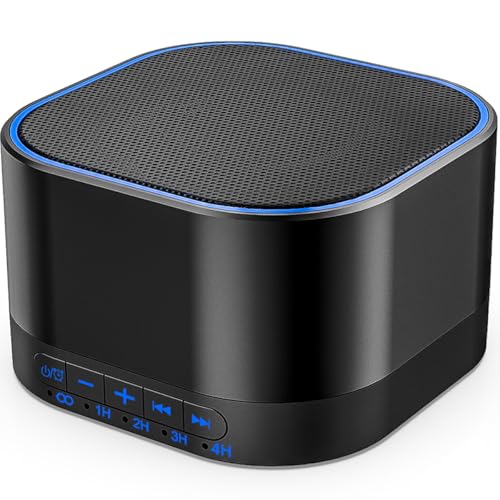
The LectroFan Classic lists 20 sounds, a timer and USB power. The Magicteam machine lists 20 non-looping sounds, white, brown, pink and blue noise, a timer and plug-in power. The Kipcush machine lists non-looping sound and USB power, and its listing doesn't state a sound count or a timer.
My one opinion
Pick the sound source before you count the sounds. The reason is in the table: the sound source column tells you whether you're buying one natural whoosh or a menu. A list of 20 sounds is nice, but most people settle on one favorite within a week. (Dev keeps a spreadsheet of sounds he'd pick. It has one row, and he's proud of it.)
How to read the white noise machine table
Sound source
Real fan, digital non-looping, or digital looping, as the listing states it. We mark a machine as a real fan only when the listing says so. A machine that plays a recording of a fan is digital.
Number of sounds
The count as stated. A fan machine doesn't have a count; it has a range of tone. A blank here on a digital machine means the listing didn't give a number, not that it has only one sound.
Noise colors
White, pink, brown or other colors, only as listed. White noise is the brightest, a hiss. Pink is softer. Brown is the deepest, closer to a rumble. If you already know you want a low sound, the brown noise machines list is built for that.
Timer
Yes when the listing states a timer. A timer turns the sound off after a set time. If you want sound all night, check the machine can also run continuously.
Power
- Plug-in (AC). For a nightstand or dresser near an outlet.
- USB. Runs from a charger, a power bank or a laptop port, which helps on a trip.
- Battery or rechargeable. For travel; those machines are on the portable white noise machines page.
Maker wording
Some listings in this category describe uses beyond an adult bedroom. We write about adult use only, and we don't repeat that marketing as advice.
Choosing within the list
Here's how the four machines sort, using only what their listings state.
- You want no loop, guaranteed. The fan machine, because there's no recording to loop.
- You want a choice of sounds. The LectroFan Classic or the Magicteam, each with 20 stated sounds.
- You want named noise colors. The Magicteam lists white, brown, pink and blue.
- You want it to run off a USB charger. The LectroFan Classic or the Kipcush.
- You want a timer. The LectroFan Classic or the Magicteam state one.
- You want the plainest possible machine. The fan, or the Kipcush with its short spec list.
If two machines tie on what you care about, the tiebreaker is where it will sit. A plug-in machine needs an outlet within cord's reach. A USB machine needs a charger brick, which you probably already have in a drawer.
Volume: steady, not loud
A sound machine runs for hours, close to you, every night. That's long exposure, so volume matters more than it does for the radio in your kitchen.
The NIDCD, part of the NIH, says sounds at or below 70 dBA are unlikely to cause hearing loss even after long exposure. Long or repeated exposure at or above 85 dBA can. Normal conversation sits at about 60 to 70 dBA. None of the four listings here states a decibel figure, so you'll set it by ear:
- Lower than you think. If you'd have to raise your voice to talk over it, it's too loud.
- Across the room, not on the pillow, not beside your head.
- Toward the noise. Between the bed and the door or window often works better than on the nightstand.
- Don't turn it up to fight a loud noise. If the noise outside is louder than a comfortable machine, ear plugs are the better tool.
Night-shift note: in radio, the goal at 3 a.m. was never to be the loudest thing in the room. It was to be the thing nobody noticed missing. A sound machine has the same job description, and it doesn't need a raise.
Placement and cords
Most of these machines plug into a wall or a USB charger near the bed, so the cord is part of the setup.
- Run the cord down the back of the nightstand or dresser, not across the bed or under the pillow.
- Keep the machine off the mattress. It belongs on furniture, where the maker's manual says.
- Leave the vents clear on a fan machine; it pulls air through the housing.
- Use the adapter the maker supplies or names, especially for USB machines that seem happy with any charger.
A tidy cord is also a quiet cord. Nothing to catch with a foot at 2 a.m., nothing to tug the machine off the edge when you reach for your water. I learned the same lesson in a radio studio, where every loose cable eventually found a shoe.
Shared rooms and old houses
A sound machine in a shared bedroom is a negotiation. One person wants a fan, the other wants rain, and somebody wants silence. Here's what tends to work.
- Place it between the bed and the noise, so it covers the door or the window more than either pillow.
- Agree on the lowest level that still works. It's easier to turn it up a notch next week than to unhear a loud first night.
- Try each sound for a few nights. The first night of any new sound is the strangest.
In an older house, with pipes, radiators and floors that talk, deeper sounds often blend better with the low thumps. That's a pattern to try, not a promise. Jules and I settled on brown noise after one week and a short, polite debate about waves. Biscuit voted by falling asleep during the waves, which we decided didn't count.
A sound machine vs a box fan or a phone app
You don't have to buy a machine to find out if you like steady sound.
- A box fan does the same masking job with air. In a Minnesota January, that air is a draft nobody asked for, and an old fan can rattle, which is exactly the sudden sound you were trying to cover.
- A phone app costs nothing to try. Put the phone across the room, not under the pillow, and see whether steady sound helps at all.
- A dedicated machine frees the phone, has its own volume and timer controls, and doesn't light up with messages at 2 a.m.
If an app works for a week, a machine is a reasonable next step. If it doesn't, a machine probably won't either.
Health claims and what we don't say
A white noise machine is a sound source, not a sleep treatment. Some listings use words like "therapy" in their names. That's the maker's wording, and we don't repeat it as a claim. If you regularly can't fall asleep or stay asleep, that's worth a talk with your doctor rather than a louder machine.
Who should skip this list
- Your bedroom is quiet and nothing wakes you. Enjoy it, and don't add sound to fix a problem you don't have.
- You dislike any sound at night. Ear plugs reduce sound instead of adding it.
- The noise is very loud. Turning a machine up to compete isn't the answer; plugs or fixing the source work better.
- You want something for a suitcase. The portable white noise machines list keeps battery and rechargeable machines.
More on sound and sleep
- White noise machines, the full type page with every field explained
- Brown noise machines, for the deeper sound
- Sleep sanctuary guide, for light, sound and temperature in one room
- Sleep gifts, where a sound machine often lands in December