Section
Desk Exercise Equipment for Home and Office
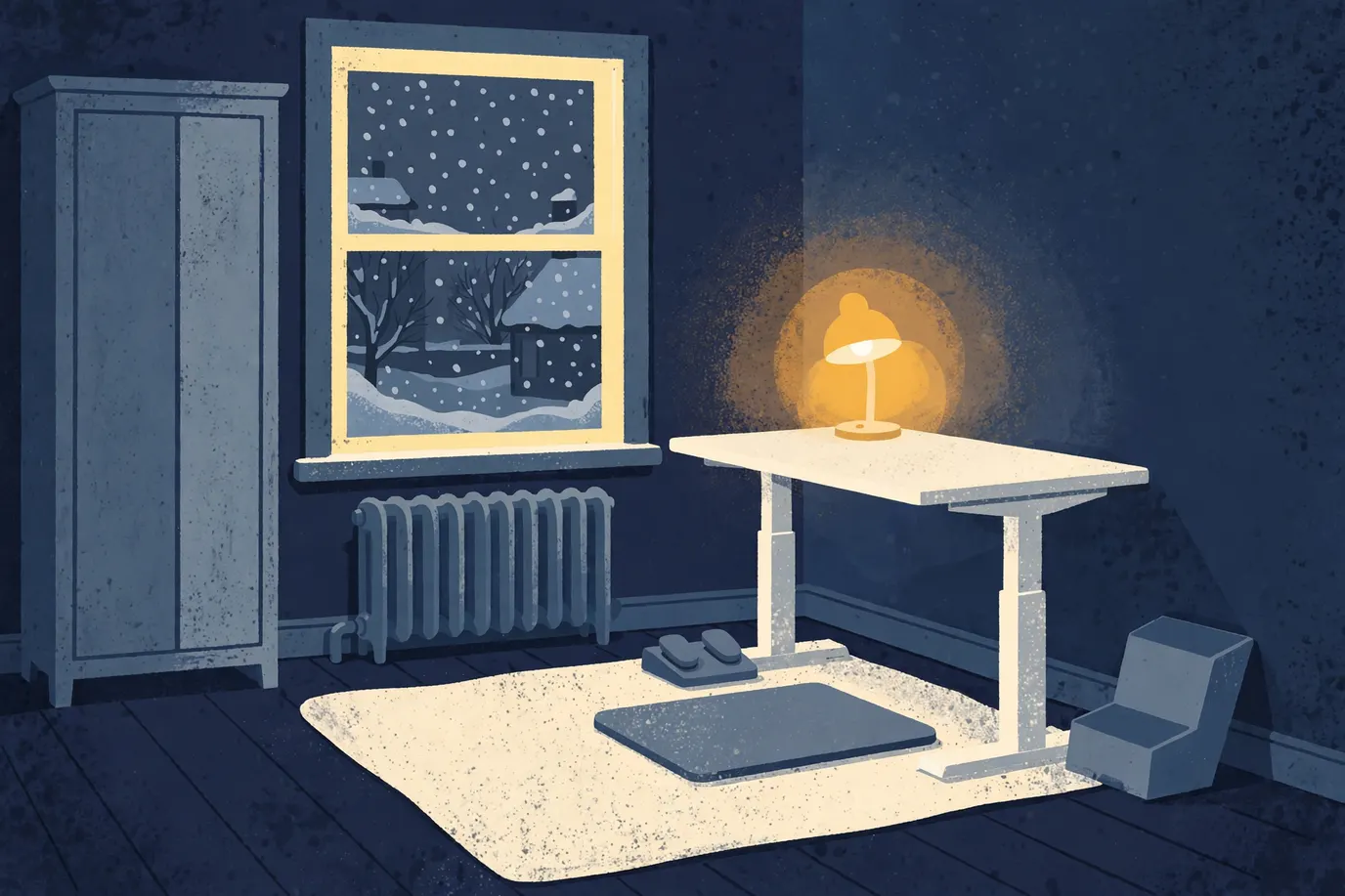
Desk exercise equipment comes in three kinds: walking pads and compact treadmills you walk on, steppers and climbers you step on, and under-desk ellipticals and pedal bikes you use sitting down. Pick the kind first, then check two numbers on the listing: the maker's max user weight and the size that has to fit under or beside your desk. I'm Dev. I work upstairs in the duplex, and Margo can hear every one of these from her kitchen.
In this section
Best-of lists
Best Walking Pads, Picked by Max User Weight and Top Speed
Walking pads whose maker states both a maximum user weight and a top speed, highest weight limit first, one per brand. Safety key or auto-stop is shown for every pick.
Brands in this section
Desk exercise equipment comes in three kinds
Step count: everything in this section is built to sit near a desk, fit in a small room and get put away. There are three kinds, and the first decision is whether you want to stand or sit while you use it.
- Walk on it. Walking pads, under-desk treadmills and compact folding treadmills. You stand, the belt moves.
- Step on it. Steppers, mini and twist steppers, stair steppers and vertical climbers. You stand and push pedals or handles.
- Pedal it. Under-desk ellipticals and under-desk bikes. You sit at a normal desk and pedal.
That split matters more than any feature. A walking pad needs a standing desk, or at least a desk you're willing to stand at. A pedal machine needs a chair and enough room for your knees. A stepper needs neither, but you probably won't type on one. (I tried to imagine answering a support ticket on a stepper. The ticket would read like it was typed on a stepper.)
This site covers compact home machines only. Full-size treadmills, manual treadmills and gym equipment aren't here. If you want to run, you want a different machine, and it's out of scope here.
Walking pads, under-desk treadmills and compact folding treadmills
A walking pad is a compact, low treadmill made for walking, often under a desk. An under-desk treadmill is the same idea, sold for desk use. A compact folding treadmill folds up for storage and often has a handle or rail. The names overlap a lot on listings, so read what the maker says the machine is for, not just what it's called.
The rough differences, as makers describe them:
- Walking pad. Flat, no handle, slides under a sofa or bed. Built for walking.
- Under-desk treadmill. Same flat shape, marketed for standing desks. Usually walking speeds.
- Compact folding treadmill. Folds in half or flips up, sometimes with a handle you raise for faster walking or light jogging.
- Walking pad with a handle. A flat pad with a fold-up bar. See walking pads with handles.
Top speed and max user weight come first
Here's my one opinion for this page: check the max user weight and the top speed before anything else on a walking pad. Those two fields decide whether it fits you and your pace.
Max user weight is the maker's stated weight limit for the person on the belt. The table shows it exactly as the maker states it. If the maker doesn't give one, the table says "Not stated by the maker", and that machine doesn't go on any list sorted by weight. Stay within the stated limit.
Top speed is the fastest the belt goes, in miles per hour (mph). Watch the unit. Some listings give speed in kilometers per hour, and 6 km/h is not 6 mph. NIST sets a mile at exactly 1.609344 km, so 6 km/h is about 3.7 mph. We show speed in mph only when the maker's number and unit are clear. The same goes for weight: a limit stated in kilograms gets converted at NIST's 0.4535924 kg per pound, and the table keeps the maker's unit in view.
If you want to see what a given pace feels like in steps, the steps-to-miles calculator shows how many steps a mile takes at walking speeds.
Incline, folding and the handle
Incline is how steep the belt is set. Some machines raise the deck with a motor, some with a manual setting, and many walking pads stay flat. The table shows incline as the maker states it, in percent or levels, and says whether it's automatic or manual when the maker does. A listing that just says "incline" without a number gets no number from us.
Folding means the machine folds or flips up, as the maker says. A flat pad that slides under a couch isn't the same thing, and we keep the maker's word for it.
The handle is either there or it isn't, but listings rarely say "no handle". We mark it only when the maker or the photos make it clear.
Safety key and auto-stop
A safety key is a clip that stops the belt if you step off. Some use a key with a clip you attach to your clothes, and some say they stop the belt on their own when you step off. A few have an emergency stop button.
Makers often leave this out of the listing. That's why it's a required field here. If the maker doesn't state a safety key, clip, stop button or auto-stop, the table says "Not stated by the maker" instead of leaving the cell blank.
Noise depends on your floor, too
A noise figure in decibels (dB) shows up in the table only when the maker states one. Plenty of listings say "quiet" with no number. Our quiet walking pads page lists only machines with a stated dB figure, because a word isn't a measurement.
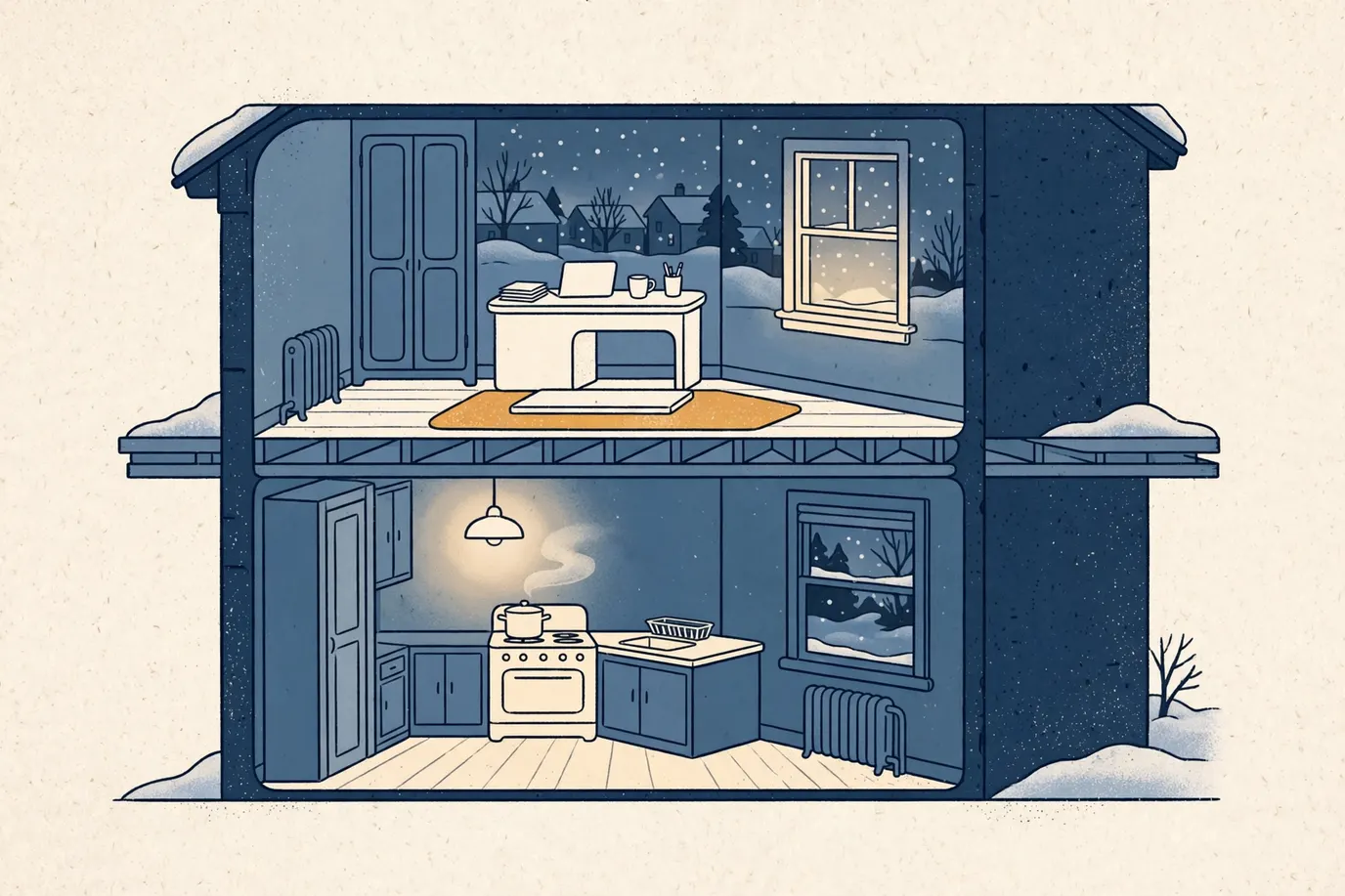
Here's what the dB number doesn't cover: your floor. Margo can tell when my meetings run long by the floorboards above her kitchen. She says she knows my standup by the creak at 9:05 and my all-hands by the creak that doesn't stop. That's an old wood floor in a 1924 duplex, not any particular machine. But it's the reason I'd put a mat under anything with a motor or a belt, and keep the machine off a spot that already squeaks.
A few placement notes for upstairs rooms and apartments:
- Mat under the machine. A dense exercise mat helps protect the floor and can soften vibration.
- Away from walls. Leave room behind the belt. Nothing should sit where the belt ends.
- Cord along the floor. Not across the walking path, and not under a rug.
- Level spot. Check the maker's setup instructions for clearance and leveling.
Care matters too. Many walking pad makers ask you to lubricate the belt on a schedule. Our guide on how to lubricate a walking pad covers the general steps, and the maker's manual always wins.
Desk height when you walk
A walking pad lifts you off the floor by the height of its deck. That means your standing desk has to go up by the same amount, or you'll be typing with your elbows in the wrong place. The table shows deck height as the maker states it, and handle-up height separately on models with a handle.
Measure your standing desk height first, then add the deck height from the listing. If your desk can't rise that far, the pad won't sit right under it. (I know my desk height to the half inch. It's in the spreadsheet. The spreadsheet has a tab for it.)
Once it fits, our walking pad workouts guide has simple ways to structure a walking day.
Steppers, mini steppers and vertical climbers
A stepper is a machine with two pedals you step on. Mini steppers are small enough to slide under a desk or into a closet. Twist steppers add a side-to-side motion. Stair steppers for home are larger and more upright. Vertical climbers add handles you pull while you step, a climbing motion, and many fold for storage.
What the table shows for these:
- Stepper type. Mini, twist, stair or climber, as the maker names it.
- Resistance. Hydraulic, air or another type, only as stated. We don't guess from photos.
- Max user weight. Required. "Not stated by the maker" when it isn't given.
- Handlebar. Whether the maker says there's a bar to hold.
- Resistance bands. Included or not, as stated.
- Folds. For climbers, as the maker says.
Steppers have no belt and no motor, which makes them simple. But they still have moving parts near the floor, and a mini stepper is easy to trip over when you're not using it. Put it away like you'd put away a vacuum cleaner.
Under-desk ellipticals and pedal bikes
An under-desk elliptical is a seated pedal machine. Your feet move in an oval, sort of like a standing elliptical cut down to fit under a desk. An under-desk bike is the same idea with a circular pedal stroke. Some are motorized and move your feet for you. Our site keeps both kinds on one page.
These are the most office-friendly option, because you stay in your chair. The big question is fit. The unit's height plus how high your knees rise while pedaling has to clear the underside of your desk. Measure from the floor to the underside of the desk, then compare that with the unit height the maker states. Leave room. Your knees will find the gap you forgot.
The table shows, as stated:
- Height. The maker's figure, not the shipping box.
- Resistance levels. Number of levels and type, when given.
- Max user weight. Required, or "Not stated by the maker".
- Noise. A figure only when the maker states one.
- Remote, app or power. Battery, plug-in or none, as stated.
A chair on wheels can roll back from a pedal machine while you push. A chair that doesn't roll is simpler, and a mat under the unit helps keep it from sliding. (Ask anyone who has pedaled their desk chair halfway across the room during standup. On mute, thankfully.)
How to read the tables in this section
Every table on the walking pad, stepper and under-desk pages follows the same rules. Facts come from the maker first, then the Amazon listing. If a field is empty, it stays empty.
- "—" in a cell. The maker doesn't state that spec. We don't fill it in.
- "Not stated by the maker". Used only for required safety fields: max user weight, safety key or auto-stop, the maker's intended use and the maker's safety warnings. Those columns always show, so a missing answer is visible.
- Maker wording. Claims like "quiet", "for home use" or fitness wording appear only as the maker states them. We don't add our own.
- Display metrics. Many consoles show time, speed, distance, steps and calories. Those readouts are the device's estimates. We list what the display shows, never the numbers it produces.
What we don't claim
No machine in this section comes with a calorie count, a weight-loss promise or a health result from us. Not in the text, not in the tables. If a maker uses that kind of wording, it appears only in the maker's own words, and only where it helps describe what the maker says the machine is for.
Safety around moving belts and pedals
Keeping kids and pets away from a running belt has a real reason behind it. In a 2022 letter to the group that writes the voluntary treadmill standard, CPSC staff described hazards from children and objects being pulled under the rear roller of an operating treadmill. If your machine has a removable key, storing it away from the machine means it can't be started by someone who shouldn't. Unplug it when you're done, and fold or store it where small hands can't reach the belt.
Read the maker's intended use, too. Phrases like "for home use" or "indoor use only" tell you where the machine belongs. A walking pad sold for walking isn't a running machine, whatever the top speed says.
Getting more movement into a desk day
The CDC says adults need 150 minutes of moderate activity a week, such as brisk walking, plus muscle-strengthening on at least 2 days. It also says activity can be broken up into smaller chunks across the week. That's the part desk equipment fits: a slow walk during an email-only hour, a few minutes of pedaling on a call you're mostly on mute for.
You don't need a machine for any of it. Stairs, a lap of the house between meetings and a walk after dinner all count as moving. The gear here just puts the option next to the desk where you already are.
The Sleep & Walking Tools page has the calculators I keep on my floor, including steps to miles. Keep walking.
Related
Questions people ask
How can I stay active when I work from home?
Break the day into small pieces. Take calls standing, walk a lap between meetings and use a walking pad or pedal machine during the slow parts of the day. The CDC says adults need 150 minutes of moderate activity a week, such as brisk walking, and that it can be broken into smaller chunks of time. Check with your doctor before starting a new exercise routine.
What is the best under-desk exercise equipment?
It depends on whether you sit or stand. If you stand, a walking pad or under-desk treadmill fits under a standing desk. If you sit, an under-desk elliptical or pedal bike works at a regular desk, as long as your knees clear the underside. Check the maker's max user weight and the unit's height before anything else.
Can you walk on a treadmill while working at a desk?
Yes, that's what walking pads and under-desk treadmills are sold for. Walk slowly enough to type and talk, raise your standing desk by the pad's deck height, and use the safety key or clip if the machine has one. A walking pad is for walking. If you want to run, that's a different machine.
Is sitting all day bad for you?
The CDC's advice for adults is to move more and sit less, and it says adults who sit less and do any amount of moderate or vigorous activity gain some health benefits. We don't give health advice beyond that. Desk exercise equipment is one way to add movement to a seated day, along with walking breaks and taking the stairs.
Is office exercise equipment quiet enough for calls?
Some makers state a noise level in decibels (dB), and the table shows it only when they do. Many listings just say quiet without a number. Speed, the floor under the machine and a mat all change what you hear, so a stated dB figure is a starting point, not a promise.
Sources
- Adult Activity: An Overview — Centers for Disease Control and Prevention — accessed 2026-10-27
- U.S. Consumer Product Safety Commission — staff letter to the ASTM F08.30 Treadmill Task Group on child entrapment hazards (September 22, 2022) — accessed 2026-10-27
- NIST Guide to the SI, Appendix B.9: Conversion factors — accessed 2026-10-27