Section
Sleep Accessories
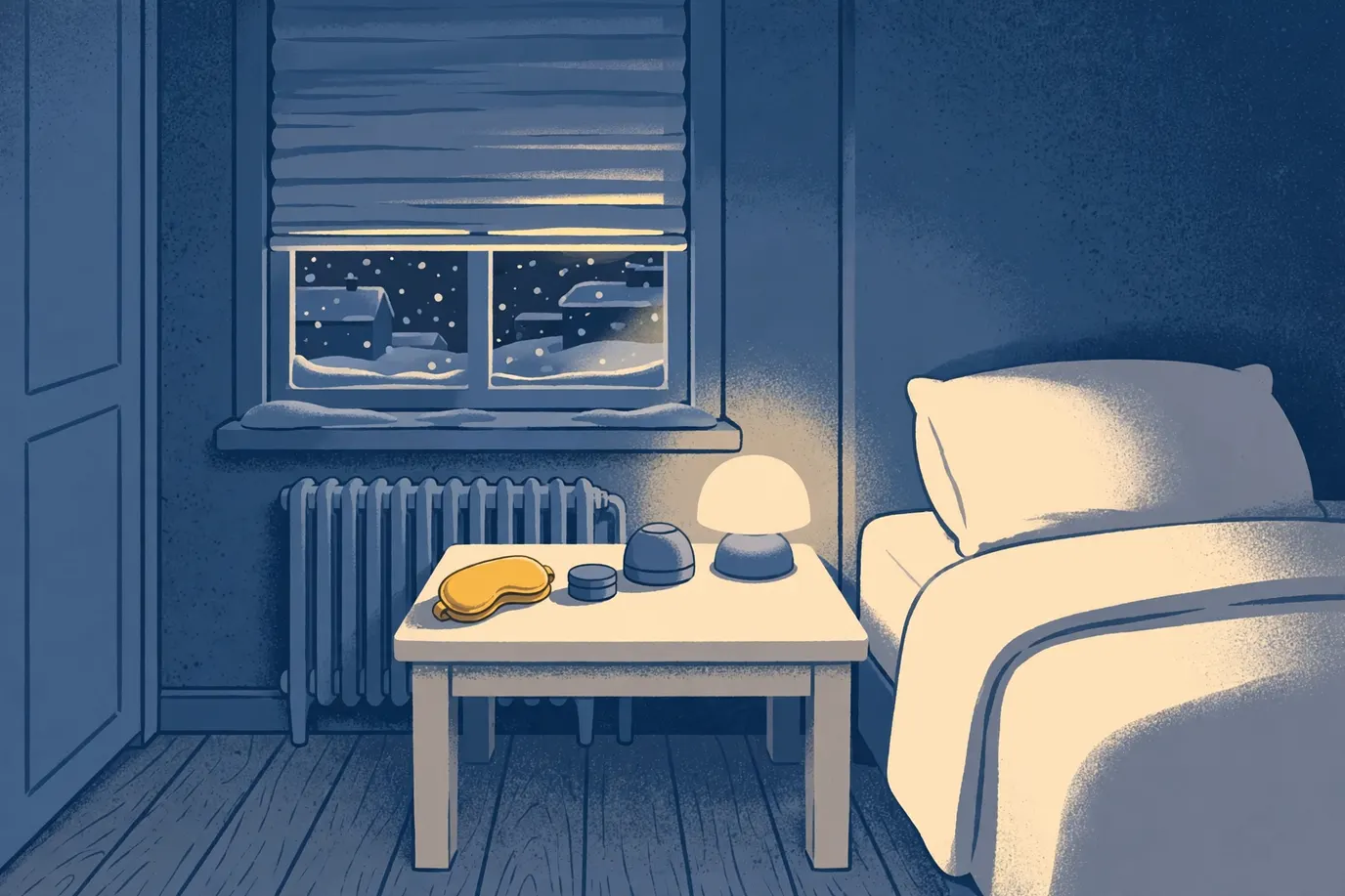
Sleep accessories are small tools for the room you actually sleep in: a mask when you can't make it dark, ear plugs or a sound machine when you can't make it quiet, a sunrise alarm when the morning comes too hard. Pick the one that matches what wakes you up. I'm Rosa. I slept through seven years of daylight for an overnight radio show, so I started with darkness and worked out from there.
In this section
Best-of lists
Best Sleep Masks
Masks with a stated type and strap, at most three of each type — flat, silk, contoured, weighted, heated, cooling — and one per brand.
Best White Noise Machines
Machines that state their sound source (a real fan or digital, looping or not) and power, one per brand, with both fan and digital machines in the list.
Best Silk Pillowcases
Mulberry silk pillowcases that state their momme (a silk weight; higher is denser), densest first, one per brand. Satin cases are not silk and are not in this list.
Brands in this section
Sleep accessories start with what wakes you up
Most sleep accessories do one of four jobs. They block light, block or cover noise, change what your head and hair rest on, or make the wake-up gentler. Name the job first.
- Light gets in. A sleep mask.
- Noise gets in. Ear plugs, sleep headphones or a white noise machine.
- Your pillowcase or hair bothers you. A silk or satin pillowcase, a bonnet or a sleep cap.
- Mornings feel like an ambush. A sunrise alarm clock.
- You like a bedtime ritual. A pillow spray, as a scent and nothing more.
The CDC's own list of sleep habits is plain: the same bedtime and wake-up time every day, a bedroom that's quiet, calm and cool, devices off at least 30 minutes before bed, and no caffeine late in the day. None of that needs a store. Accessories help when the room won't cooperate. They don't promise sleep, and when a listing does, we quote the maker.
Sleep masks: pick the shape before the fabric
A sleep mask is the cheapest way to make a room dark when the curtains can't. Shape decides the fit; fabric decides the feel and the wash.
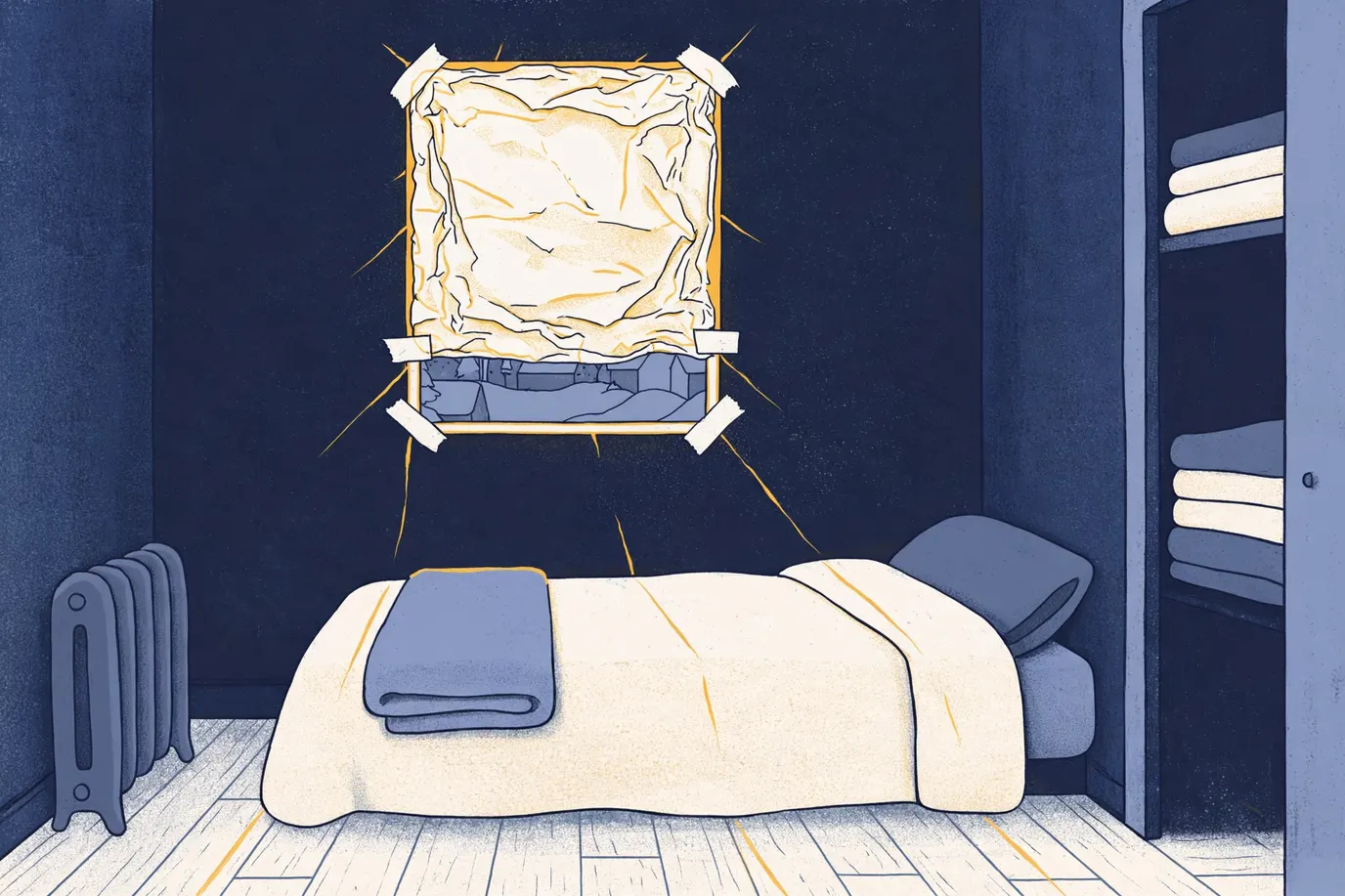
Night-shift note: from 2009 to 2016 I slept from about 9 a.m. to 4 p.m. with aluminum foil taped over my bedroom windows. The foil was never the problem. The edges were. Daylight found every gap where the tape gave up. Masks share the weak spot: light sneaks in at the nose and sides. (I learned more about tape in those years than about radio.)
Six kinds of masks, six different jobs
- Flat masks. A single shaped panel with a strap. Light, easy to pack, and they rest directly on your eyelids.
- Silk masks. A flat or lightly padded mask in silk. The same silk rule applies as for pillowcases below: mulberry silk and a momme number, or it's not silk.
- Contoured masks. A contoured mask has cups that don't touch your eyes, so you can blink under it. They're thicker, which matters if you sleep on your side.
- Weighted masks. A mask with a filled layer that rests with gentle pressure. The weight appears in the table only when the maker gives it, and any claim about what the pressure does is the maker's wording, in quotes.
- Heated masks. Warmed by USB power or in a microwave, depending on the design. Settings and auto shut-off appear only as the maker states them.
- Cooling masks. A gel insert you chill first, or a fabric the maker says cools, and how. No explanation, no "cooling" in our table.
Blackout sleep masks are masks whose listing says they block light fully; the "blackout" field shows that claim only where the maker makes it. Heated eye masks and cooling eye masks have their own pages.
A heated mask is a hot item on your face. Follow the maker's heating instructions exactly, use the auto shut-off if it has one, and don't wear one to sleep unless the maker says it's made for that. Keep any cord away from where you sleep.
Silk vs satin pillowcases: read the fiber, not the shine
A shiny pillowcase can be silk or satin, and the photo won't tell you which. The label will. The FTC requires textile labels in the US to list fiber content by generic fiber name and percentage by weight. That line is where "silk" or "polyester" shows up. Silk pillowcases should say silk there.
My one strong opinion in this section: "silk" means mulberry silk with a momme number. Mulberry silk comes from silkworms fed on mulberry leaves. Momme is a weight measure for silk; a higher number means denser fabric. If a listing says "satin" or gives no momme, it's satin. That's fine. It's just not silk.
Here's how the tables handle it:
- Silk appears only when the maker or listing names mulberry silk.
- Momme and a silk grade (like 6A) appear only as stated, with "as listed" when only the Amazon listing states them.
- Satin is written as satin, with the fiber the listing gives.
- Certifications like OEKO-TEX appear only when the maker states them for that exact item.
Satin pillowcases usually go in a regular wash; silk often asks for a gentle cycle or hand washing, and the silk pillowcase washing guide walks through it. Read the care tag first. Margo's rule: "If you won't follow the care tag, you didn't buy a pillowcase. You bought a project."
You'll also see copper pillowcases and bamboo pillowcases. For both, the fiber content line tells you what the fabric is. Any claim about skin or hair is the maker's, quoted as the maker's. Plain cotton cases live with the bedding, on the pillowcases page.
Bonnets, sleep caps and scrunchies keep hair off the pillowcase
A hair bonnet is a loose cap you wear to bed so your hair rests on smooth fabric instead of rubbing on a cotton pillowcase. A satin bonnet is the most common version, and silk bonnets follow the same silk rule as pillowcases. Sleep caps are snugger, often a beanie shape with a satin lining.
What decides the fit:
- Band. Elastic, a wide soft band or an adjustable tie. A tie lets you set the fit yourself.
- Size. Some bonnets are listed by size or as extra large for long or thick hair. Go by the listing's own size notes.
- Layers. Single or double layer, and reversible or not, as listed.
- Fiber. Silk only with mulberry silk stated; otherwise satin, with the fiber the label gives.
Silk scrunchies sit in the same corner of the drawer. The silk rule applies to them too. The satin pillowcase and hair guide takes on the hair question, without promises.
Ear plugs and sleep headphones: the NRR is the number to compare
Ear plugs for sleeping come in a few materials, and each fits differently.
- Foam ear plugs. Rolled small, then they expand in the ear canal. Usually disposable.
- Silicone ear plugs. Reusable, washable, some shaped to sit in the canal.
- Wax ear plugs. Moldable plugs that seal over the opening of the ear.
- Noise cancelling ear plugs. The name covers several designs, from filtered plugs to electronic ones. Read what the listing says the plug actually does.
- Ear muffs for sleeping. Soft over-the-ear covers for people who don't want anything in the ear.
The NRR, or noise reduction rating, is the US label number for hearing protectors. Under the EPA's labeling rule, the label shows "Noise Reduction Rating", the model's rating in decibels, a line saying existing hearing protectors range from about 0 to 30, with higher numbers meaning more effective, and the words "when used as directed". That last part matters: a plug inserted the wrong way won't reach its number.
Some listings show an SNR instead. SNR is the single number rating from an international standard, ISO 4869, and it's calculated a different way: one standard deviation instead of two, and without the extra 3 dB the NRR subtracts. So an SNR and an NRR for the same plug can differ. We never present an SNR as an NRR. If a listing states no NRR, the table says "Not stated by the maker".
This section covers ear plugs for sleep only, not plugs for work sites or shooting ranges. A plug that blocks a lot of sound can also block the sounds you need at night, so it matters how you wear it and whether an alarm still reaches you. The guide on whether it's bad to sleep with earplugs goes into the questions people ask most.
Sleep headphones play sound instead of blocking it
Sleep headphones are usually a soft headband or a mask with thin speakers inside, so you can listen lying down. Sleep earbuds sit in the ear and are built small enough for a pillow. They're made to play sound, not to protect hearing, so expect no NRR unless the maker states one.
Check battery life, charging and whether the speakers come out for washing, as the maker states. Side sleepers should check how thick the speaker pads are. Keep the volume low: the NIDCD says long or repeated exposure at or above 85 dBA can cause hearing loss, and a speaker an inch from your ear for hours is long exposure.
White noise machines, brown noise and sunrise alarms work on sound and light
In radio, silence longer than three seconds is called dead air, and it makes everyone in the building nervous. In a bedroom, silence is the goal. When you can't get real silence, steady sound is the next best thing. (My old program director would not have agreed.)
White noise machines cover sounds with a steady one
White noise is a steady, even sound that masks other noises. A white noise machine plays it, along with other sounds, depending on the model. Brown noise is a deeper version with more rumble and less hiss, and brown noise machines list it as a sound type. Portable white noise machines run on a battery or USB for travel.
What to check, as the maker states it:
- Sound types. Fan, white, brown or pink noise, nature sounds.
- Volume control. How low it goes.
- Timer. Plays all night or shuts off after a set time.
- Power. Plug-in, USB or battery.
A white noise machine is for steady sound, not loud sound. Put it across the room and keep it at a level you could talk over. Many sound machines are also sold for kids' rooms; we describe adult use only.
Sunrise alarm clocks wake you with light first
A sunrise alarm clock is a light that brightens slowly before your alarm, then adds sound if you want. The NIGMS, part of the NIH, says light and dark have the biggest influence on circadian rhythms, the body's daily clock. That's background, not a promise. A sunrise alarm is a gentler alarm, not a sleep treatment, and we describe it by its light and sound settings: brightness levels, how long the sunrise takes, sound choices and whether it works as a reading lamp.
The 4:10 on my nightstand would like a word with anyone who calls mornings gentle. If you're setting a new wake-up time, the sleep calculator counts back to a bedtime in whole sleep cycles.
Sound machines and sunrise clocks plug in near the bed, so where the cord runs matters. Put the unit where the maker's manual says, with the cord clear of the mattress and pillows.
Pillow sprays are a scent, not a sleep aid
A pillow spray is a fragrance you mist on your pillowcase before bed. Lavender is the most common scent. Think of it as a signal that the day is over. Biscuit, my beagle, thinks the signal is that my side of the bed is now his.
Read the ingredient list, spray the way the label says and let the fabric dry before you lie down. On silk, check the care tag first. Any claim beyond scent is the maker's wording, in quotes. We don't list sprays sold as sleep supplements or with an active sleep ingredient.
How to read the tables in this section
Every product table on these pages follows the same rules:
- Fields only as the maker states them. Momme, NRR, battery life, brightness levels, weight and sound types come from the maker or the listing, never from a guess.
- Safety fields always show. For ear plugs that's the NRR; for heated masks, the heat settings and auto shut-off. When the maker doesn't state one, the cell says "Not stated by the maker" instead of going blank.
- No prices. They change too often to print. The Check price button opens the current Amazon page.
Each list prints its own rule, so you can see why a product is there. "Not stated by the maker" is information too: the maker didn't put it in writing.
Where to go next
Not sure what's keeping you up? Start with the room, not the gear. The sleep sanctuary guide covers light, sound and temperature in one place. Then come back for the one accessory that answers the one thing that's wrong. The most-read lists here are the best sleep masks, best silk pillowcases, best earplugs for sleeping and best white noise machines.
Sleep well.
Related
Questions people ask
What are the best gadgets to help you sleep?
The useful ones answer a specific problem. Light in the room: a sleep mask. Noise you can't control: ear plugs, sleep headphones or a white noise machine. A hard wake-up: a sunrise alarm clock. None of them replaces the basics the CDC lists, like a steady bedtime and a quiet, cool room. Start with the thing that wakes you up most often and buy for that.
Is a sleep aid device the same as a medical device?
Not on this site. Here a sleep accessory means an everyday item like a mask, ear plugs, a pillowcase or a sound machine. We don't cover breathing machines, anything a doctor prescribes or anything you swallow, and we don't describe any accessory as a treatment. If trouble sleeping keeps up for weeks, that's a conversation for your doctor, not a shopping list.
What goes in a sleep kit?
A simple sleep kit is the few things that make a strange room more like yours: a sleep mask, a pair of ear plugs in a small case and, if you like sound, sleep headphones. Some listings sell masks and ear plugs together as a set. Pack them in the same pocket every time so you aren't hunting for them at midnight.
How loud should a white noise machine be?
Quiet enough to talk over and comfortable for hours. The NIDCD, part of the NIH, says long exposure to sound at 70 dBA is unlikely to cause hearing loss, while long or repeated exposure at or above 85 dBA can. Most listings don't give a decibel number, so set the machine across the room, not beside your ear, and keep the volume low.
Should I get a silk or a satin pillowcase?
Silk is a fiber made by silkworms. Satin is a weave, and satin pillowcases are often polyester. A silk pillowcase listing should name mulberry silk and give a momme number. Satin is easier to wash and usually costs less. Neither is a skin or hair treatment. Pick by the fiber you want and the care tag you're willing to follow.
Sources
- About Sleep — Centers for Disease Control and Prevention — accessed 2026-10-27
- 40 CFR § 211.204-1 — Hearing protector primary label (EPA), Legal Information Institute — accessed 2026-10-27
- Personal Attenuation Ratings versus derated Noise Reduction Ratings for hearing protection devices — J Acoust Soc Am (PMC, NIH) — accessed 2026-10-27
- Noise-Induced Hearing Loss — National Institute on Deafness and Other Communication Disorders (NIH) — accessed 2026-10-27
- Circadian Rhythms — National Institute of General Medical Sciences (NIH) — accessed 2026-10-27
- Threading Your Way Through the Labeling Requirements Under the Textile and Wool Acts — Federal Trade Commission — accessed 2026-10-27