Home Fitness · Type
Mini Steppers: Straight, Twist and Air Steppers for Small Spaces
A mini stepper is a small floor stepper with two pedals on a compact base, made to step in place in a corner, by the sofa or under a desk. It's the smallest kind of stepper, part of the wider steppers family. It suits people with very little floor space who want to move between other things. The main choice is straight or twist, then the maker's max user weight and whether you need something to hold. I'm Dev, and I like any machine that fits under my desk with room left for my feet.

We earn a commission if you buy through our links, at no cost to you. Disclosure





What’s in this listSmall floor steppers — straight or twist — as the maker names them. “—” means neither the maker nor the Amazon listing states it.
A mini stepper is the smallest stepper you can buy
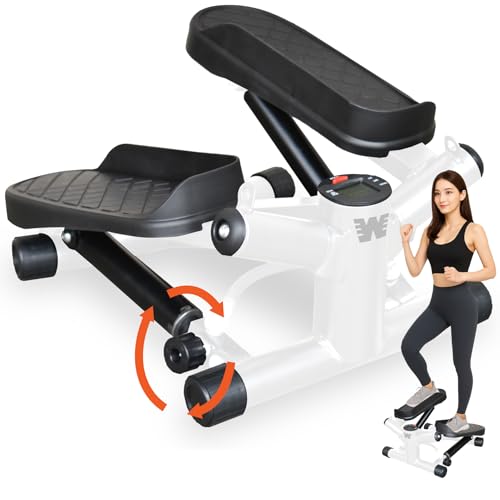
A mini stepper is two pedals on a small base. You stand on it and press one pedal down, then the other, in a short, steady rhythm. Cylinders under the pedals push back, so each step takes some effort. No belt, no motor and, on most models, no plug.
It's the smallest member of the steppers family. Stair steppers and vertical climbers have frames and handles you hold. A mini stepper has a base you could slide under a desk, and that's the whole appeal. On this page, a stepper counts when the maker names it a small floor stepper, straight or twist.
Step count: I'm usually the last light on in the duplex. A mini stepper is the only exercise machine I can picture fitting between my desk chair and the radiator, with room left for my feet.
Straight, twist and air: the kinds of mini stepper
Makers sell mini steppers in a few versions. The names in listings overlap, so here's how they differ when makers describe them clearly:
- Straight mini stepper. Pedals go up and down. The simplest and steadiest step.
- Twist stepper. Pedals also swing a little side to side, so your hips turn as you step.
- Air stepper. A mini stepper with air-filled cylinders for resistance, as the maker states.
- Hydraulic mini stepper. A mini stepper with oil-filled hydraulic cylinders, as the maker states.
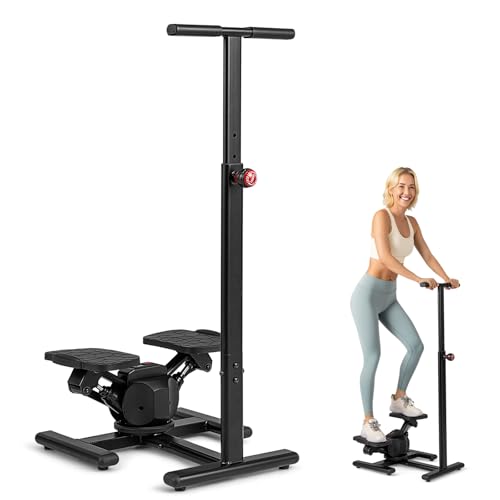
- Mini stepper with a handle. Comes with a bar or stand to hold.
- Mini stepper with resistance bands. Comes with stretchy bands clipped to the base for arm movements.
The first two are about how the pedals move. The next two are about what resists them. The last two are about what comes in the box. A single stepper can be several at once, like a twist air stepper with bands. That's why the table splits these into separate columns.
What to look at on a mini stepper listing
The table uses the same columns for every stepper. Blank means the maker doesn't state it. There's no belt and usually no motor, so there's no safety key column. The columns that are never blank are max user weight, intended use and the maker's safety warnings; if the maker gives nothing, they say "Not stated by the maker".
Max user weight decides if it's for you
This is my one opinion for this page: on a mini stepper, check the max user weight before you look at anything else. A small base and two pedals carry all of your weight with every step. The maker's limit tells you whether this one is built for you.
Max user weight is shown in pounds, exactly as the maker states it. When the maker gives only kilograms, the table converts with NIST's factor of 0.4535924 kg per pound and keeps the original unit in view. If there's no limit stated, the cell says "Not stated by the maker". Stay within the limit the maker states.
Twist or straight
Twist or side motion is yes only when the maker states the pedals move side to side. A twist stepper feels livelier underfoot. A straight one is steadier and easier to learn. If balance is a concern, straight is the simpler start, and a handle helps either way.
Resistance type and adjusting it
Resistance shows only as the maker states it: hydraulic cylinders, air (pneumatic), magnetic, body weight only, or adjustable with the type not stated. Air steppers feel springy. Hydraulic ones feel more damped. Some hydraulic models have a dial on each cylinder to change how hard the pedal pushes back, as the maker describes.
A title that says "air stepper" or "hydraulic stepper" is the maker's word. If the listing body doesn't say what the cylinders are, the table won't guess.
Handle or no handle
Handlebar is yes only when the maker states the stepper comes with a bar or stand to hold. Mini steppers often have none. Without one, set the stepper next to something sturdy at about hip height, like a kitchen counter or a heavy desk. Not a chair on wheels, not a bookshelf that isn't anchored to the wall.
Resistance bands
Resistance bands is yes only when the maker states the bands are included. They attach to the base, and you pull them while you step. If you'd never use them, don't pay attention to this column.
Size, weight and where it goes
Dimensions come from the maker, never the shipping box. On a mini stepper, check the height with the pedals up. That's the number that decides whether it slides under a desk or a sofa when you're done.
Product weight is the maker's stated weight. A mini stepper is meant to be moved, so a lighter one is more likely to come out of the closet. Check the figure if you'll carry it up and down stairs.
Pedal travel and step height
How far each pedal drops, the step height, changes how a mini stepper feels more than almost anything else. Few makers state it, so it isn't a column in our table. Some hydraulic models tie it to the resistance dial, as the maker describes. If the step height matters to you, look in the maker's manual, and start with short, controlled steps either way.
Display, intended use and warnings
Display lists what the little screen counts, as stated: time, steps, sometimes calories. Those readouts are the stepper's own estimates. We list what it shows, never the numbers. Check the listing for how the screen is powered.
Intended use is the maker's wording, shown word for word: "for home use", "indoor use only". Safety warnings are the maker's own, such as advice to consult a doctor or keep children away. We don't write our own into the column, so a blank one says "Not stated by the maker".
Mini stepper listings often promise calories, toning or "gentle on joints". Where that wording helps explain what a maker says the stepper is for, it appears in quotes as the maker's words. We don't give a calorie figure or a result for any stepper.
Using a mini stepper as an under desk stepper
Makers sometimes sell a mini stepper as an "under desk stepper", and it does fit under many desks. In practice, most people step standing up, beside the desk, during a break or a call where they're on mute and not typing. The desk is where it's stored, not always where it's used.
Some makers describe seated use, with the stepper on the floor in front of a chair. Do that only if the maker's manual describes it, and use a chair that doesn't roll. If you want to move your legs while you sit and type, an under desk elliptical or pedal bike is built for that job.
Rosa came up the back stairs one evening and said a mini stepper is the only exercise machine she's ever seen that would have fit in her old radio booth. She did not offer to try that.
Mini stepper or a bigger stepper
A mini stepper wins on size. You can put it away in a few seconds and forget it's there. A stair stepper with a handlebar wins on steadiness: a frame to hold and a bigger base. A vertical climber adds arm handles and usually folds.
- Mini or twist stepper, if floor space is tight and you have something sturdy nearby to hold.
- Mini stepper with a handle, if you want something to hold but still need small.
- Stair stepper, if you want a frame and don't mind the size.
- Vertical climber, if you want your arms in it too.
The steppers page compares all four kinds and covers stepper vs treadmill.
Setting up a mini stepper
- Level, hard floor with a non-slip mat. Carpet can let the base rock.
- Shoes on. Flat, supportive shoes keep your feet centered on the pedals.
- Something sturdy at hip height. If the stepper has no handle.
- Small, steady steps. Follow the manual on how far the pedals should travel.
- Rest as the manual says. Some makers state rest periods for the cylinders.
- Put it away after. A mini stepper is just the right size to trip over.
Doing the same short step over and over is a little Groundhog Day. The trick that helps is pairing it with something you already do daily, like the evening news or the first coffee. The CDC's guideline for adults is 150 minutes a week of moderate activity, such as brisk walking, and it can be split into smaller chunks of time. A few minutes on a mini stepper is one small chunk on a day the sidewalk is ice.
The page's safety line asks you to keep kids and pets away from moving parts. On a mini stepper, the pinch point is the gap under each pedal as it comes down. Step off and stop before someone small or a pet comes close. Before you buy, look up the brand and model on the CPSC recalls and warnings page.
Who should skip a mini stepper
Skip it if you want to move while you type. Most people can't work on a stepper; a walking pad or an under desk elliptical suits desk time better. Skip it if you need something to hold and have no sturdy surface near where it'll go, unless the maker includes a handle.
Skip it, too, if the maker doesn't state a max user weight and that's the number you need. And if you already have stairs at home and like using them, the stairs were here first.
Keep walking. Or stepping.
Related
Questions people ask
What is the difference between a mini stepper and a twist stepper?
A twist stepper is a kind of mini stepper. On a straight mini stepper the pedals go up and down. On a twist stepper they also swing a little side to side as you step, as the maker describes it. The table shows twist or side motion only when the maker states it.
What is an air stepper?
An air stepper is a mini stepper whose pedal resistance comes from air-filled cylinders, as the maker states, instead of hydraulic ones. The step feels springy rather than damped. The table shows the resistance type only from the maker's own description, never from how the cylinders look in a photo.
Can I use a mini stepper under my desk?
It fits under many desks, and some makers sell theirs as an under desk stepper. Most people step standing, between calls or during a break. Use it seated only if the maker's manual describes seated use. For pedaling while you sit and type, an under desk elliptical is built for that.
Are mini steppers with resistance bands worth it?
The bands add arm movements while you step. They're an extra, not the main reason to choose a stepper. If you'd use them, look for yes in the resistance bands column, which we fill only when the maker states the bands are included. If not, pick on max user weight, size and handle.
Do I need a mini stepper with a handle?
A handle helps with balance, especially when you're new to stepping. Some mini steppers come with a handle or a stand-up bar; many have none. If yours won't have one, set it up next to something sturdy at hip height, like a counter or a heavy desk, never a rolling chair.
Is a mini stepper quiet enough for an apartment?
It has no motor, so the sound comes from the cylinders, the pedals and the floor. Makers rarely state a decibel figure for mini steppers, so our table has no noise column for them. A dense non-slip mat under the base helps protect the floor and keeps the stepper from shifting. Neighbors below will hear footsteps more than the machine.
Sources
- Adult Activity: An Overview — Centers for Disease Control and Prevention — accessed 2026-10-27
- U.S. Consumer Product Safety Commission — Recalls and Product Safety Warnings — accessed 2026-10-27
- NIST Guide to the SI, Appendix B.9: Conversion factors — accessed 2026-10-27