Home Fitness · Type
Vertical Climber Machines: How to Read the Specs and Choose One
A vertical climber is a climber machine with pedals for your feet and handles for your hands that move together, so you climb in place, a little like going up a ladder. It suits people who want arms and legs moving at once in a small corner of the room. The main choice is fit: the maker's max user weight, the machine's height against your ceiling and whether it folds. I'm Dev. I spend a lot of my day on mute, which leaves plenty of time to read spec sheets.
We earn a commission if you buy through our links, at no cost to you. Disclosure


What’s in this listVertical climbers as the maker names them, with the stated maximum user weight always shown. “—” means neither the maker nor the Amazon listing states it.
A climber machine moves your arms and legs together
A vertical climber is a tall frame with two pedals and two handles. The pedals and handles slide up and down on rails. As you press one pedal down, the handles move too, so you reach and pull while you step. It's a ladder that doesn't go anywhere, which makes it the only ladder in the duplex nobody argues about.
Most home climbers have no motor, no belt and no plug. On some, your own body weight is the only resistance. On others, the maker states an adjustable resistance that makes each stroke take more push.
That's what sets a climber machine apart from the rest of the stepper family. On a stair stepper, you hold a handlebar that stays still. On a climber, the handles move and your arms do some of the work.
Step count: listings blur the names. Titles say "stair stepper", "vertical climber", "climbing machine" and "stair climber" for the same machine, sometimes all in one title. Our table follows the maker's description of the kind, so the stepper type column tells you it's a climber even when the title also calls it a stepper.
What to look at in a vertical climber listing
I read a climber listing in the same order I'd triage a support ticket: the thing that can stop you first, then the things that make it easier. On a climber, the things that can stop you are your weight and your ceiling.
Max user weight is the first column
Max user weight is the maker's stated limit for the person on the machine, in pounds. It's my one opinion for this page: check max user weight before anything else. A climber whose limit doesn't cover you, with some margin, isn't a choice.
Here's the catch with climbers. In the data we collected, the listings for this type mostly don't state a max user weight as a spec. When that happens, the table shows "Not stated by the maker", and the column stays on the page so you can see the gap. It's not a blank we forgot to fill.
Titles sometimes hint at a number. One MOMODA title says "Heavy-duty supporting 300+lbs". A title like that tells you the maker wants you to think about weight. It doesn't give you a limit you can check, and "300+" isn't a figure. Look for a single stated max user weight in the manual or the spec section before you buy. If you can't find one, ask the seller through the listing, or pick a machine whose maker states it.
Height and your ceiling come second
A climber is the tallest machine in the stepper family. You stand on pedals that rise off the floor, and you reach above your head for the handles. Add those together and the top of your head can end up a long way up.
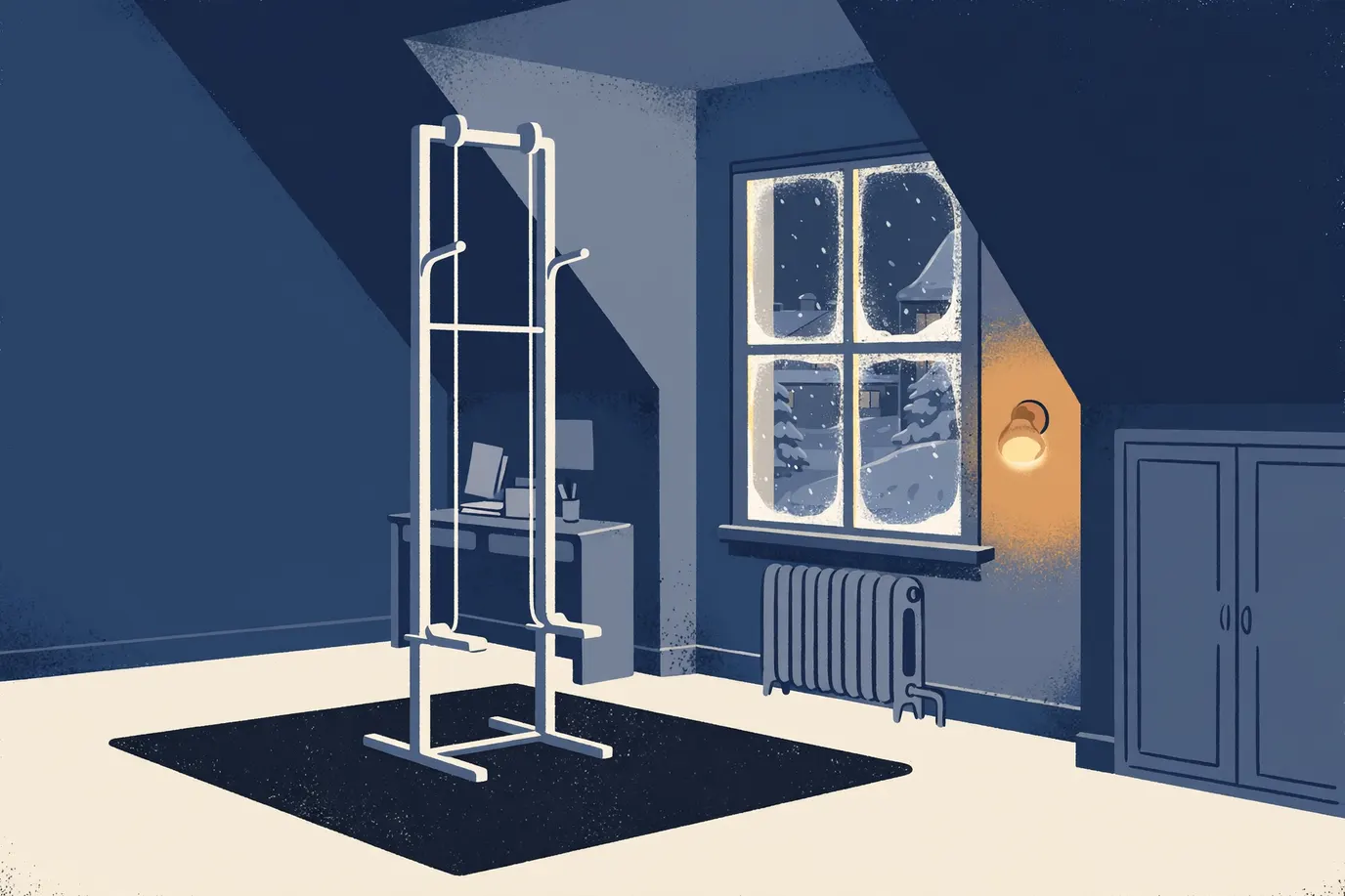
Few listings in our data state a height, so there's no height column in the table. Look for the maker's assembled height in the manual. Then think about the highest pedal position plus your own height. If you live in an attic room, a basement with ducts or a house with a sloped ceiling upstairs (hello, 1924 duplex), measure before you buy, not after.
Resistance tells you how much each stroke asks of you
Resistance type is what makes the pedals and handles harder to move. The table shows it only as the maker states it:
- Body weight only. No added resistance. The Sunny Health & Fitness vertical climber listing states this.
- Adjustable, type not stated. The HXD-ERGO climber listing states 6 adjustable resistance levels without saying how it works.
- Not stated. Some listings don't mention resistance at all.
A "level" is the maker's own scale. Level 6 on one climber doesn't match level 6 on another. If you want something to change as you get used to it, an adjustable model gives you that. If you want simple, body weight only is about as simple as it gets.
Folding is the main storage question
Foldable shows yes only when the maker states the climber folds. At our last check, every climber listing in our data states it folds. A folded climber is usually tall and thin, so it can stand against a wall, behind a door or in a closet.
Folding still takes a minute, and climbers are long. If you'll fold it every day, look for wheels or a stated folded size in the manual. If it will stay up in one corner, folding matters less.
Handles and handlebars come in two kinds
Handlebar shows whether the maker states hand grips. All climbers have something to hold, but the setup varies. The Goplus listings state a detachable handlebar. The HXD-ERGO and MOMODA listings state adjustable handlebars. Some climbers also have a fixed bar in the middle, so you can hold still while only your legs move.
Before you buy, picture where your hands will be at the top of a stroke. If you're shorter or taller than average, an adjustable handle helps the machine fit you.
Display tracks what it tracks
Display lists what the screen shows, as the maker states it. The Goplus listings state an LCD monitor. One MOMODA listing states a built-in monitor. Others don't mention a display.
We list that a display exists and what it tracks when the maker says. We never repeat the numbers it gives. Calorie readouts on any machine are its own estimate. Your watch will disagree. My spreadsheet will disagree with both. (Wednesday trivia teaches you to accept more than one answer.)
Step range is worth a look
Some makers state an extended step range, which means the pedals travel farther up and down. The Sunny Health & Fitness climber title names an "Extended Step Range". A longer range is a bigger movement. A shorter range is easier to start with. Few makers state a number, so we don't show a step-range column; check the manual if it matters to you.
Vertical climber vs stair stepper
This is a spec comparison, not a verdict.
| Vertical climber | Stair stepper | |
|---|---|---|
| Hands | Handles move, you pull | Handlebar stays still |
| Height | Tallest stepper kind | Shorter |
| Floor space | Small footprint, tall frame | A little wider, less tall |
| Folding | Often stated | Often stated |
| Learning curve | Arms and legs together | Legs only |
If you want your arms involved, a climber does that. If you only want to step and have something steady to hold, a stair stepper is simpler. If you want the smallest machine, a mini stepper slides under a desk and has no handles at all. The steppers page lays out all four kinds.
Vertical climber vs walking pad
These solve different problems. A walking pad has a motor and a belt, and you walk forward at a steady pace, often while you work. A climber has no motor, and you climb in place for a short session.
You can walk on a pad during a long call. You can't really climb during one. I tried picturing it, and the picture had me dropping my headset, so I stopped. If your goal is moving more during the workday, a pad or an under desk elliptical fits that better. If your goal is a short session before or after work in a small space, a climber fits.
Where a climber machine fits at home
A climber's footprint is small. Its height isn't. That shapes where it can go.
- Tallest part of the room. Not under a sloped ceiling, a ceiling fan or a hanging light.
- Level floor. A climber shouldn't rock when you push one side down.
- A dense mat. It helps keep the base in place and protects the floor.
- Space to step off. Room on both sides and behind you.
- Away from walkways. A doorway or hallway is the wrong spot.
Put it somewhere you'll see it. A climber folded behind a closet door has a way of staying there. (Ask anyone with a closet. The closet always wins.)
Using a vertical climber safely
Climbers are simple machines, but you're off the floor and moving all four limbs, so the basics matter.
- Shoes on. Flat, supportive shoes keep your feet centered on the pedals.
- Hold on. Keep at least one hand on the handles or a fixed bar.
- Step on and off at the bottom. Wait until the pedals stop moving.
- Small strokes first. Start with a short range and build up.
- Check the locks. If it folds, make sure the frame is locked open before you climb.
- Kids and pets clear. Rails, pedals and folding joints have pinch points.
Stay within the maker's stated weight limit. If the listing doesn't state one, find it in the manual before you use the machine. Before you buy any climber, search the brand and model on the CPSC recalls and warnings page. It takes a minute and it's free.
Who should skip a vertical climber
Skip one if your ceiling is low or sloped and you can't find a spot with clear headroom. Skip one if you want to move while you work; climbing and typing don't mix.
Skip one if you want something you can use without thinking about it. A climber asks for some coordination, at least at first. A stair stepper or a walking pad asks less.
And skip any climber whose maker doesn't state a max user weight, if that's the number you need to see before you buy. That's a fair reason to wait. A machine that can't tell you its limit can't tell you whether it fits.
The CDC's guideline for adults is 150 minutes a week of moderate activity, and it can be split into smaller chunks. A climber is one way to fill a few of those minutes on a day the sidewalk is ice. It's not the only way, and it doesn't have to be yours.
The Home Fitness page has the rest of the small machines, and fitness gifts has ideas if the climber is for someone else.
Related
Questions people ask
What is a vertical climber machine?
A tall frame with two pedals and two handles that slide up and down on rails. As one foot goes down, the hand on the same or the other side moves too, depending on the design, so you climb in place. Most home models have no motor. The table shows the kind, handles, folding and resistance as the maker states them.
Is a vertical climber better than a stair stepper?
Neither is better. On a stair stepper you hold a handlebar that stays still. On a vertical climber the handles move and you pull them as you step. A climber is usually taller and needs more headroom. If you don't want your arms working, a stair stepper is the simpler machine.
How much weight can a vertical climber hold?
Only what its maker states as the max user weight. Read that figure in the manual or the listing's spec section, not in the title. A title that says something like 300+ isn't a limit you can check. Stay under the stated figure, and if a listing gives two figures, follow the lower one.
Do vertical climbers fold?
Many home climbers are sold as folding, and the table shows yes only when the maker states it. A folded climber is usually tall and narrow, so it can stand against a wall or go in a closet. Check the folded size in the manual if storage is the reason you're buying one.
How tall a ceiling do I need for a vertical climber?
There's no single number, because it depends on the machine's height, its highest pedal setting and your own height. Look for the maker's stated assembled height, then add the step height and your height at the top of a step. In an attic room or under a sloped ceiling, measure before you buy.
Sources
- Centers for Disease Control and Prevention — Adult Activity: An Overview — accessed 2026-10-28
- U.S. Consumer Product Safety Commission — Recalls and Product Safety Warnings — accessed 2026-10-28