Bedding & Throws · Type
Comforters
A comforter is a stitched shell filled with down, fiber or another fill, made to go on the bed as it is, no cover needed. Choose it in this order: size from your mattress, warmth from how hot you sleep, fill from what you can wash at home. The table shows fill, warmth and size only as each maker states them. (I keep my bedroom at 66°F. Dev calls that a walk-in cooler. He's welcome to buy his own comforter.)
We earn a commission if you buy through our links, at no cost to you. Disclosure


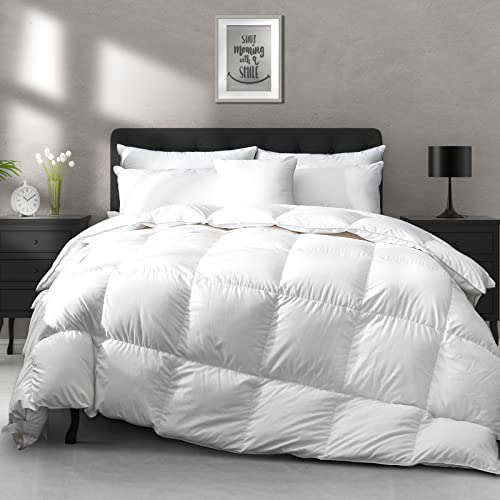


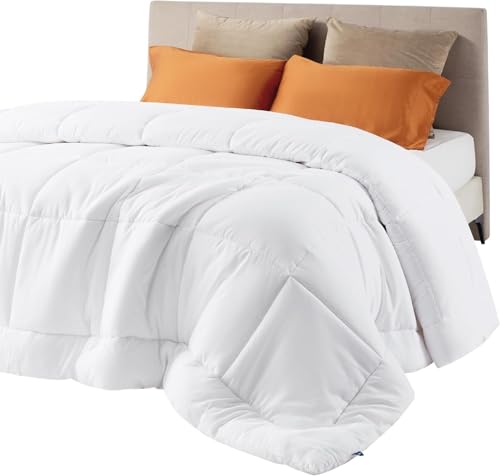

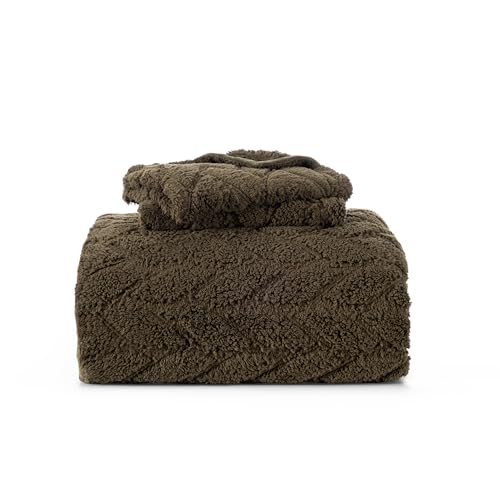
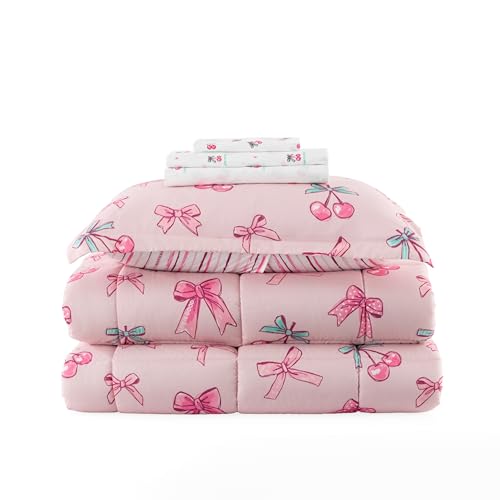


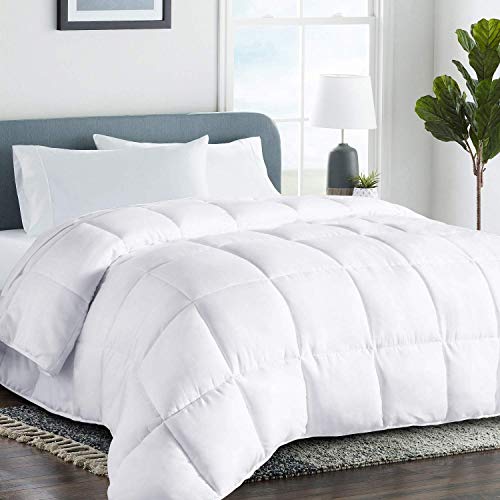


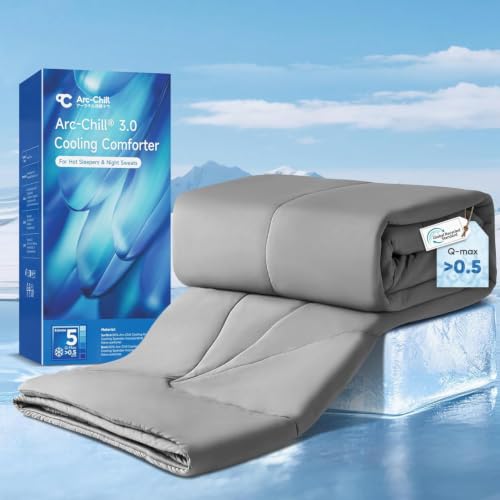


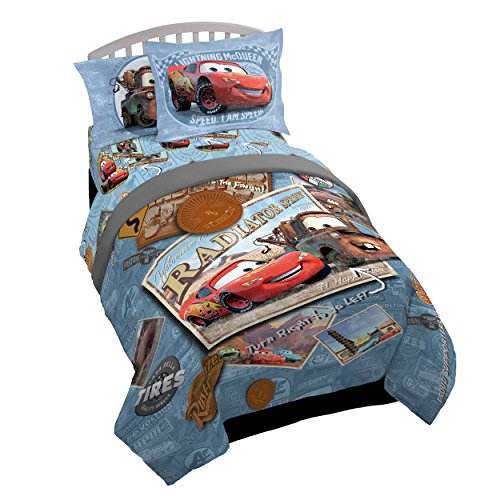


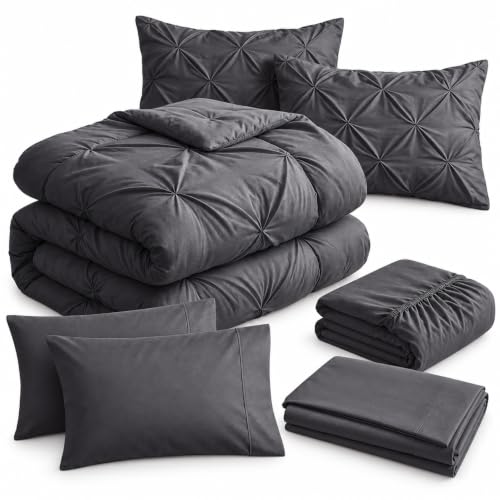


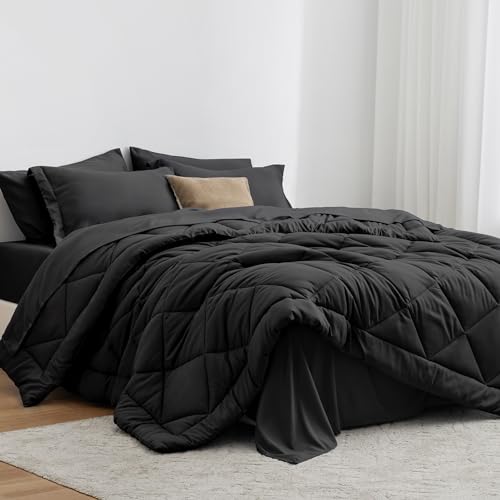


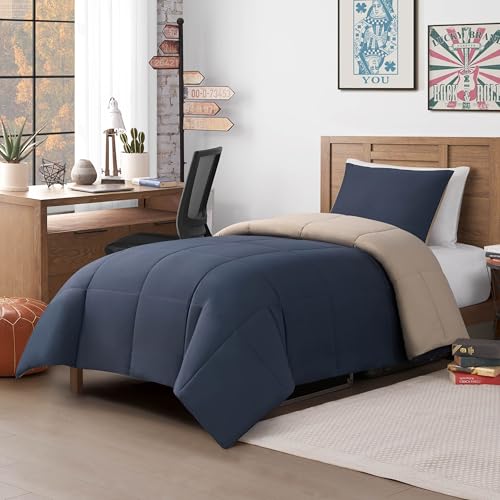


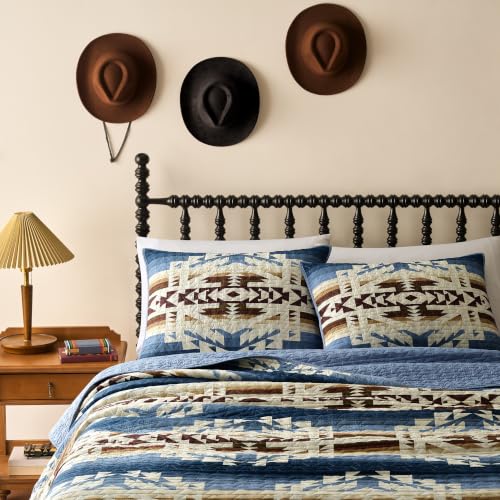


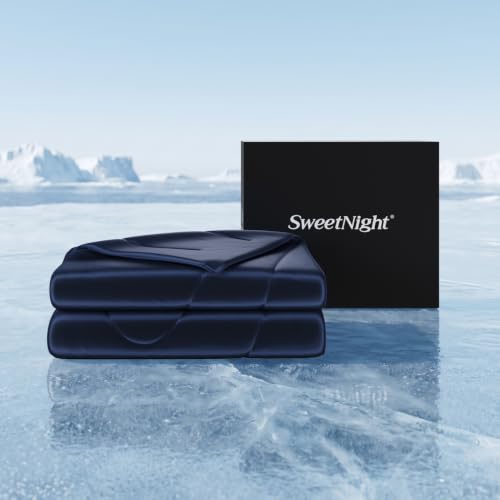


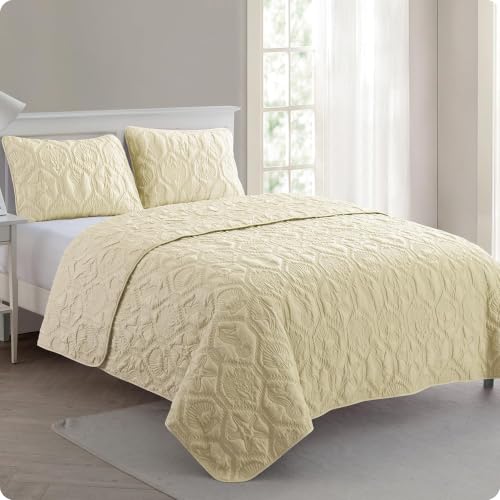


What’s in this listComforters, sets and duvet inserts with fill, warmth and size as the maker states them. Fill power shows only for down and only where it's given. “—” means neither the maker nor the Amazon listing states it.
A comforter goes on the bed as it is
Here's the rule. A comforter is a finished blanket: an outer shell, a fill inside, and stitching that holds the fill in place. You put it on the bed and you're done. No cover, no ties, no wrestling.
That's what sets it apart from its neighbors:
- Duvet insert. Same idea, but usually plainer, made to go inside a removable duvet cover.
- Comforter set. A comforter sold with matching pillow shams. See comforter sets.
- Bed in a bag. A comforter set plus sheets, all in one package. See bed in a bag.
- Quilt or coverlet. Thinner, flatter, little or no fill. The quilt vs coverlet vs comforter guide sorts them out.
The product type column says whether a row is a comforter, a duvet insert or a set. If you plan to put a cover on it later, look for the word insert.
What to read in the comforter table
Every column shows a value only when the maker states it. A blank means the maker didn't say. It doesn't mean "no".
Fill is the first thing to read
Fill decides warmth, weight and how you'll wash it. Under the federal Textile Act, a filling used for warmth has to be disclosed on the label by fiber, separately from the covering. The FTC's own example reads "Covering: 100% Rayon / Filling: 100% Cotton". So the label always has an answer, even when the listing is vague.
The fills you'll see:
- Down or down and feather. Light for its warmth, squishes small, needs care to dry fully.
- Down alternative. Polyester fiber made to feel like down. Usually machine washable.
- Polyester fiber. Plain fiberfill. Often in comforter sets and bed-in-a-bag sets.
- Cotton, wool or silk. Less common, heavier or flatter, care varies a lot.
One thing I check on every listing: the word "down" in a title. Some titles say "down" when the fill row says polyester or alternative. We only show the fill the maker's fill line states.
Down fill power shows only for down
Fill power is a number some makers give for down. The FTC has described it as the ability of feather and down to resist compression, and as an indicator of warmth. Higher means fluffier down for the same weight.
Two cautions. The FTC also noted that different tests give different results, so a number from one maker isn't a perfect match for another's. And fill power says nothing about how much down is inside. A light summer comforter and a winter one can share a fill power. The table shows it only for down and only where the maker gives it.
The down and feather ratio, when stated, is the other half. "75% down / 25% feather" is shown word for word. We never work it out from a phrase like "goose down" in a title.
Warmth is the maker's word
Makers describe warmth with words like lightweight, all-season, midweight or winter. There's no shared scale. One maker's all-season comforter can be thinner than another's lightweight one. The table shows the word each maker uses, and nothing more.
How I'd read it:
- Hot sleeper or warm room: lightweight or summer, plus a breathable shell.
- Most bedrooms most of the year: all-season or midweight.
- Cold room, cold feet: heavyweight or winter.
My bedroom sits at 66°F. Dev's thermostat ruling is 72°F. Neither of us is buying the other's comforter.
Shell fabric and cooling claims
The shell is the fabric you touch. Cotton, polyester microfiber and blends are common; the fiber content column shows it as stated, with percentages when the maker gives them. Seersucker is a puckered, striped weave some shells use; it's a texture, not a fill.
"Cooling" shows only when the maker says how: a cooling yarn, a bamboo viscose shell, gel, phase-change fabric. A tag that just says "cooling" doesn't count. Hot sleepers can go further on the cooling comforters page.
OEKO-TEX and Responsible Down, as stated
OEKO-TEX STANDARD 100 is a label for textiles tested for harmful substances. OEKO-TEX says every component of a labeled item is tested, and you can check a label by scanning its QR code or entering the certificate number in its Label Check. The table shows OEKO-TEX only where the maker states it.
The Responsible Down Standard column shows only on down comforters, and only where the maker says so.

Comforter sizes come from your mattress
Size names on comforters aren't fixed. A queen comforter from one maker can be several inches wider than another's. So start with the mattress, which does have standard sizes. The Better Sleep Council lists:
- Twin: 38 x 75 inches
- Twin XL: 38 x 80 inches
- Full: 53 x 75 inches
- Queen: 60 x 80 inches
- King: 76 x 80 inches
- California king: 72 x 84 inches
Then add the drape. For a comforter that reaches the bottom edge of the mattress, add twice the mattress depth to the width and one depth to the length (the head end sits under the pillows). A queen size comforter for a 12-inch mattress needs at least 84 x 92 inches. A king size comforter for the same depth needs at least 100 x 92 inches. Want it to cover the box spring too? Add that height. The bedding size guide does the math for any depth and checks a label for you.
Two size traps:
- Full/queen in one. Many makers sell one comforter for both. It's sized for a queen top, so on a full it hangs longer at the sides.
- Package dimensions. Some listings show the size of the box. A comforter is not the size of its box. We show finished dimensions only, and only from the maker.
Comforter types and which to choose
The variants have their own pages. Here's how they split:
- Down comforters. For cold rooms and people who want warmth without weight. Fill power and down ratio shown when stated.
- Down alternative comforters. For anyone who'd rather skip down, or wants a home-washable fill.
- Cotton comforters. Cotton shell, sometimes cotton fill. For people who like a natural fiber against the skin.
- Cooling comforters. For hot sleepers, with the cooling method stated.
- Comforter sets and bed in a bag. For a matched bed in one purchase.
Color is the other big search: white comforter, black comforter and every shade between. Color isn't a spec, so it's in the listing photos, not a column. My one note from the hotel years: a white comforter shows everything, and a black one shows lint. Pick your battle.
Match the comforter to the bed and the room
Fill and warmth are half the choice. The other half is who sleeps there and where.
- Two people, two thermostats. Pick for the warmer sleeper and keep a throw on the colder side. Going a size up gives both of you more edge to pull, so a king comforter on a queen bed is a common trick. Check the label against your mattress first.
- A guest room. Guests sleep warm, cold and everything between. An all-season fill with a top sheet under it lets them adjust. Keep a spare blanket folded at the foot. (I made guest beds for 22 years. Nobody ever asked for less.)
- A cold upstairs or a drafty old house. A winter-weight fill, or a midweight one with a blanket under it. Layers win again.
- A dorm or a small room. A twin XL size and a machine-washable fill. The dorm bedding page lists sets that include sheets.
- A feather-free bed. Down alternative or another non-feather fill. The fill line on the label tells you, by law.
If you want a short list instead of a long table, the best comforters page picks by stated fill, warmth and size. Down shoppers can go straight to best down comforters, and hot sleepers to best cooling comforters.
Who should skip a comforter
I'll say it plainly. A comforter is the wrong buy for some beds.
- You change your bedroom look often. A duvet insert and a couple of duvet covers cost you less closet space.
- You need to wash bedding every week. Washing a cover is easier than washing a whole comforter.
- You sleep very hot all year. A quilt or coverlet may be all you want.
- The care tag says dry clean only. That's not a blanket. That's a decoration.
The night every throw left the archive
During the late-January 2019 cold snap, the duplex boiler quit overnight. Everyone slept in my living room under every comforter and throw in the archive until the repair truck came the next afternoon. Dev counted blankets for a spreadsheet nobody asked for.
What I learned wasn't about any one blanket. It was about layers. A comforter you can fold back, plus a throw on the chair, handles more nights than one heavy comforter you can't adjust.
Read the care tag before you buy
Housekeeping rule: read the care tag before the price tag. A comforter is the biggest thing most people wash at home, and the tag decides how often that happens.
What the care column can say:
- Machine wash cold, tumble dry low. The easy one. Dry fully, or the fill can clump.
- Machine wash. Read the tag for temperature.
- Spot clean. Small marks only. Plan on a cover.
- Dry clean. Every cleaning is an errand.
A king comforter needs room to move in the drum. If your washer is small, a laundromat machine or a cover may save the day. And down needs a long, low dryer cycle to dry all the way through; follow the maker's instructions on yours.
Between washes, a duvet cover on a comforter or insert keeps it cleaner longer. Many comforters work as inserts if the sizes match. A few listings mention corner loops for a cover. If it isn't stated, don't count on it.
More on bedding
The bedding section lists every comforter, sheet and blanket type. For the layer underneath, see bed sheets. If you're stuck between a comforter and a quilt, read the quilt vs coverlet vs comforter guide.
Tuck it in.
Brands in this list
Related
Questions people ask
What size comforter do I need for a queen bed?
A standard queen mattress is 60 x 80 inches, per the Better Sleep Council. Add twice your overhang to the width and one overhang to the length. To cover a 12-inch-deep queen mattress down to its bottom edge, look for a comforter at least 84 x 92 inches. Makers size their queen comforters differently, so compare the finished size on the label, not the word on the package.
What size is a king size comforter?
It depends on the maker. A standard king mattress is 76 x 80 inches, so a king comforter that covers a 12-inch mattress to its edges needs to be at least 100 x 92 inches. Some listings sell one size for California king and king; a California king mattress is 72 x 84 inches, so check both numbers against yours.
What is an all season comforter?
It's a maker's word, usually for a midweight fill meant to work for most of the year. There's no shared scale behind it, so one maker's all-season can be another's lightweight. The table shows the warmth word exactly as each maker uses it. If you sleep hot or keep a cold room, read the fill and fabric too.
What's the difference between a comforter and a duvet?
A comforter is finished on the outside and goes on the bed by itself. A duvet, or duvet insert, is usually plainer and goes inside a removable duvet cover. Many comforters can also be used as an insert if they fit the cover. A few listings say they have corner loops for that; if it isn't stated, don't assume it.
Can I wash a comforter at home?
Read the care tag. Many comforters are labeled machine wash cold and tumble dry low, some are spot clean only, and a few are dry clean only. The tag on your comforter is the instruction that counts. A big comforter also needs room in the drum to move, so check your washer size before a king goes in.
Sources
- Better Sleep Council — Mattress Sizes — accessed 2026-10-27
- FTC — Threading Your Way Through the Labeling Requirements Under the Textile and Wool Acts — accessed 2026-10-27
- FTC — FTC Wants the Low Down of Feather Merchant Guides (1996) — accessed 2026-10-27
- OEKO-TEX — STANDARD 100 by OEKO-TEX — accessed 2026-10-27