Bedding & Throws · Type
Duvet Covers
A duvet cover is a removable fabric case that zips or buttons around a duvet insert or comforter, so you wash the cover instead of the whole thing. Choose it by three things: the size of your insert, the fabric you like to sleep under, and a closure you can live with. The table shows fabric, closure and what's included only as each maker lists them. The insert is never included unless the listing says so. (Dev learned that one the hard way.)
We earn a commission if you buy through our links, at no cost to you. Disclosure








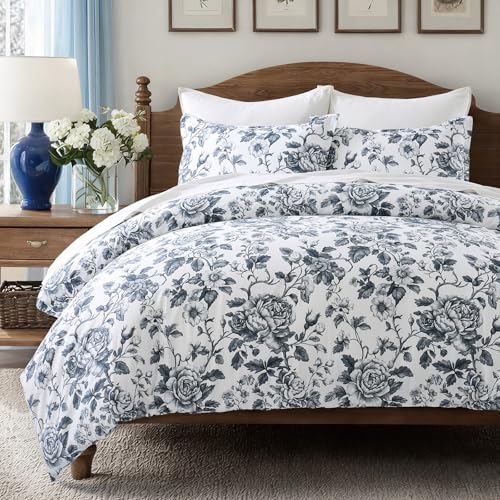


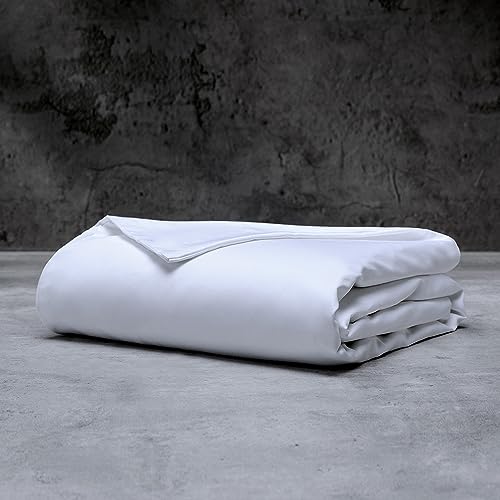


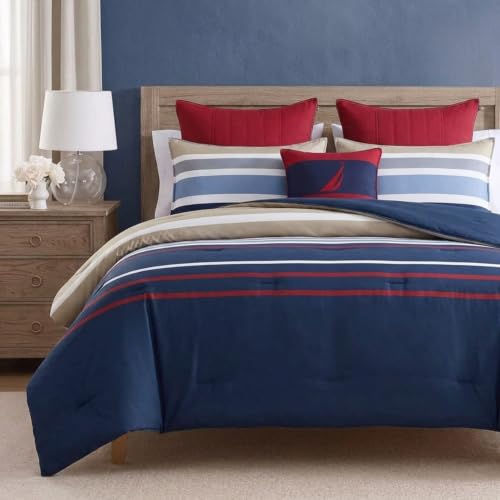


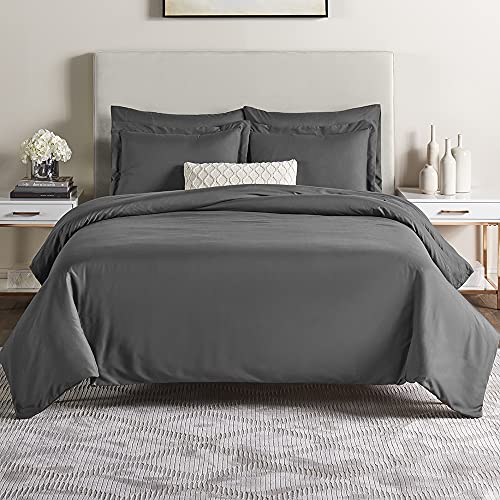


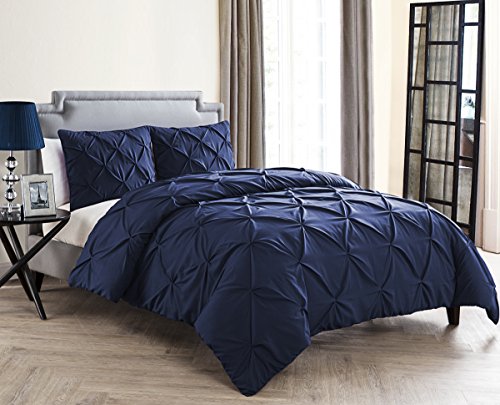


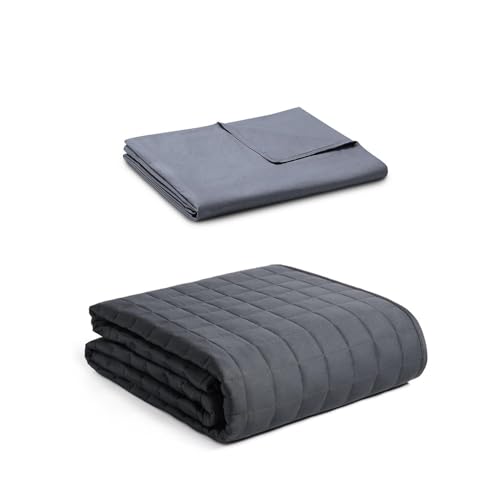
What’s in this listDuvet covers and duvet cover sets, with fabric, closure and what's included as listed. A cover holds a separate insert. “—” means neither the maker nor the Amazon listing states it.
A duvet cover is a pillowcase for your comforter
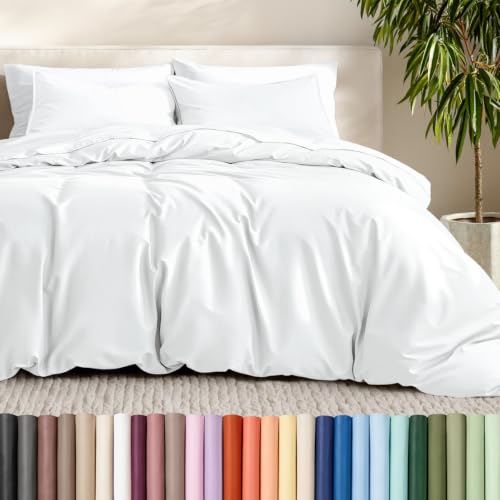
Here's the rule. A duvet cover is a big fabric case, open at one end, that you slip over a duvet insert or a comforter and then close. It's what you see on the bed. The insert inside does the warming.
Why bother with two pieces? Three reasons I gave guests for 22 years:
- Washing. You wash the cover often and the insert rarely. A cover fits in a home washer. A king comforter sometimes doesn't.
- Changing the look. Two or three covers take less closet space than two or three comforters.
- Protecting the insert. A cover keeps the fill cleaner, longer.
A duvet cover holds a separate insert. The insert is not included unless the listing says so, and the set contents column says exactly what's in the box. If you don't have an insert yet, start with comforters, which covers inserts and fills, or down comforters and down alternative comforters. For the basics, the what is a duvet cover guide goes slower.
What to read in the duvet cover table
A value shows only when the maker states it. A blank means the maker didn't say, not "no".
Fabric decides how it feels
The fabric column names the fabric type: cotton, linen or cotton-linen, flannel, velvet, microfiber or polyester, and others as stated. How I'd pick:
- Cotton. Breathes, washes well, gets softer with time. The default for most beds.
- Linen or cotton-linen. Textured, airy, wrinkles happily. See linen duvet covers.
- Flannel. Brushed and fuzzy, for cold rooms. See flannel duvet covers.
- Microfiber or polyester. Smooth, wrinkle-resistant, quick to dry.
- Velvet. Heavy drape and a sheen. Read the care tag twice.
Fiber content is the honest line
Fabric names can blur. "Linen look" isn't linen. "Cotton feel" isn't cotton. Under the federal Textile Act, bedding labels must list each fiber by its generic name with its percentage by weight, largest first, like "60% cotton / 40% polyester". That's why the table has a separate fiber content column, shown word for word from the maker.
When fabric and fiber content disagree, the fiber content wins. A "linen blend" can be mostly cotton. The percentages tell you.
Thread count, and why it's not in the table
You'll still see thread count in duvet cover listings, so here's what it means. Thread count is the number of lengthwise yarns plus crosswise yarns in a square inch of woven fabric. Under the ASTM definition, a plied yarn, two or more strands twisted together, counts as one yarn, not two or three. A label that says "300 thread count, 2-ply" is honest. Calling the same fabric 600 would likely mislead.
Thread count means something on woven cotton. It doesn't tell you much about linen, flannel or knits. On microfiber, a thread count is the seller's number and nothing more; if it ever shows, it reads "as stated by the seller". So few makers state it on covers that we left it out of the table. Fiber and weave tell you more. The sheet thread count guide goes further.
Closure: zipper, buttons or envelope
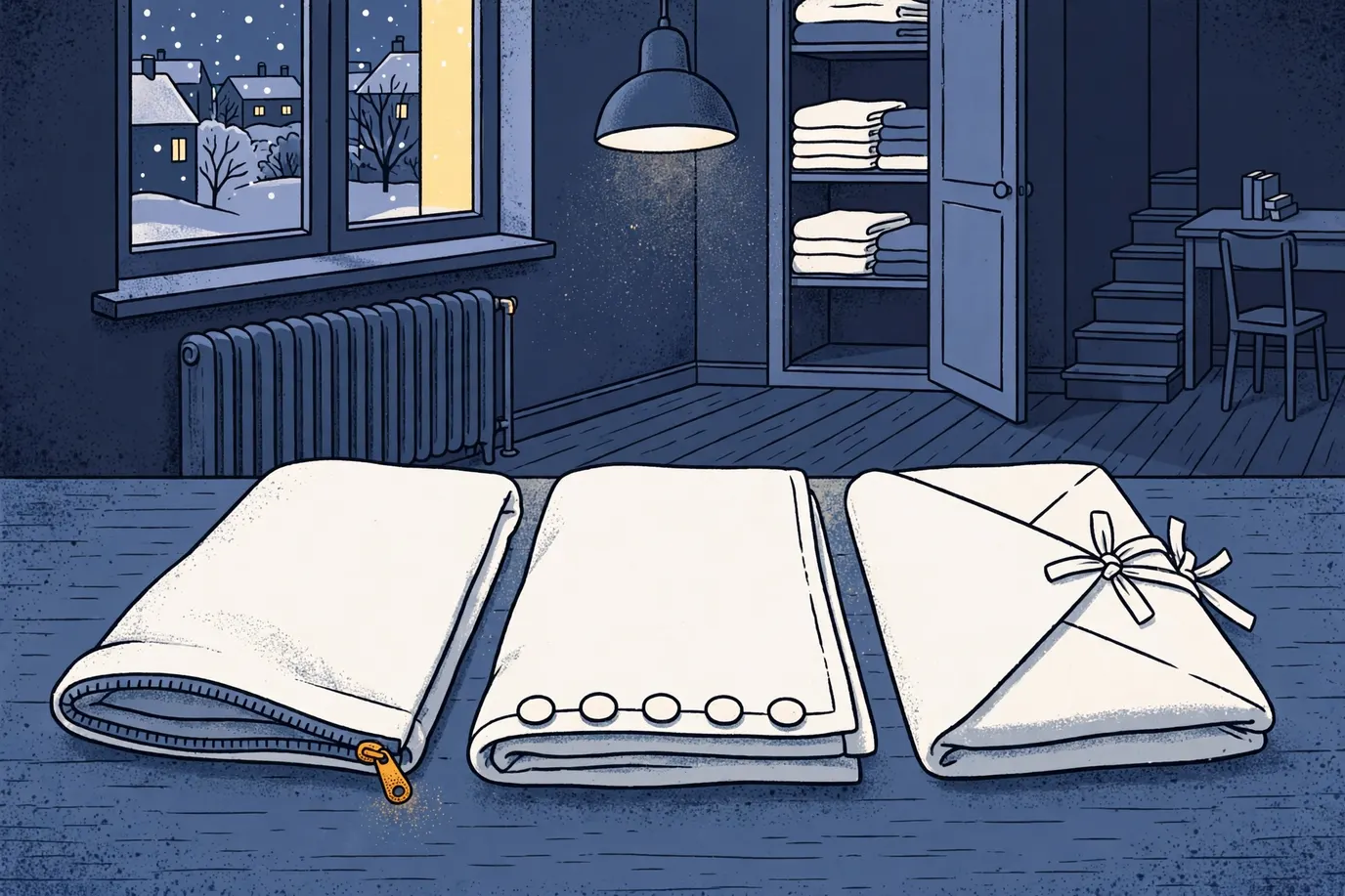
The closure column shows how the open end shuts:
- Zipper or hidden zipper. One pull. A hidden zipper sits under a fabric flap.
- Buttons. Several to close. Easy to sew back on.
- Envelope or ties. A fold-over flap, sometimes with fabric ties. No hardware.
Corner ties are a different thing. They're small fabric strings inside the cover's corners that tie to loops on an insert. Not every listing mentions them. If yours does and your insert has loops, use them. That's the fix for an insert that drifts to the foot of the bed by morning.
Set contents: count the pieces
A "duvet cover set" usually means the cover plus pillow shams, one for a twin and two for bigger sizes. Some sets add sheets. The set contents column shows the maker's own wording, because the piece counts on listings don't always count the same way. If you only want the cover, look for a row with one piece.
OEKO-TEX, as stated
OEKO-TEX STANDARD 100 is a label for textiles tested for harmful substances. OEKO-TEX says every component of a labeled item is tested, buttons and zippers too, and you can check a label by scanning its QR code or entering the certificate number in its Label Check. The table shows it only where the maker states it.
Duvet cover sizes follow the insert
The mattress decides the insert. The insert decides the cover. Standard US mattress sizes from the Better Sleep Council:
- Twin: 38 x 75 inches
- Full: 53 x 75 inches
- Queen: 60 x 80 inches
- King: 76 x 80 inches
- California king: 72 x 84 inches
A queen duvet cover is cut for a queen insert, and a king duvet cover for a king insert, but makers don't agree on the exact inches. So read the finished size on your insert's label and match it to the cover. A cover a little bigger than the insert is fine. A cover smaller than the insert won't close.
Two traps:
- Combined sizes. "Full/queen" and "king/California king" covers are common. Check that the inches match your insert, not just one of the names.
- Package dimensions. Some listings show the size of the folded package. We use the maker's size name and finished size only.
The bedding size guide works out insert size from your mattress depth and checks any label you type in.
Measure your insert before you order
This takes five minutes and saves a return. Lay the insert flat on the bed or the floor. Smooth it out without stretching it. Measure the width and the length with a tape measure, edge to edge. Write both numbers down. (I label mine. Dev writes his on his hand.)
Now compare:
- The label on the insert. If it's still attached, it states the finished size. Trust the label over your tape if the fill is puffy.
- The cover's finished size. Look for inches, not just "queen". A cover within a couple of inches of the insert is a good fit.
- Thick inserts. A very lofty down insert fills a cover more than a flat one. A cover the same size or a touch bigger gives it room.
If your insert and cover come from different makers, this check matters most. Two "queens" can disagree by several inches.
One insert, two covers
A cover makes it easy to change the bed with the seasons without buying a second insert. Flannel in January, cotton or linen by May. The insert stays the same. Store the off-season cover folded in the archive, in a cotton bag or a pillowcase, not sealed plastic, so it stays fresh.
The duvet cover burrito
In 2022 Dev spent 40 minutes inside a duvet cover. Not near it. Inside it. I came upstairs because the floorboards sounded like a hockey game.
I showed him the roll method in two minutes: cover inside out on the bed, insert on top, tie the corners, roll it all up from the head like a burrito, flip the open end around the roll, close it, and unroll. He wrote it down "for the documentation". The full steps are in the how to put on a duvet cover guide, with fewer hockey sounds.
What it taught me about buying: corner ties and a closure along the bottom edge make the roll method easy. A cover without ties still works. It just takes more shaking.
Duvet cover types and which to choose
The variants have their own pages:
- Linen duvet covers. For warm sleepers who like texture and don't mind wrinkles.
- Flannel duvet covers. For cold rooms and people who want a fuzzy top layer.
- Cotton duvet covers. The everyday choice, in percale (crisp) or sateen (smooth) weaves when the maker names one.
- Duvet cover sets. Cover plus shams, for a matched bed in one order. If you want sheets too, see bedding sets.
If you're not sure you want a cover at all, the cousins are worth a look. A quilt or coverlet is a thin finished layer with no insert. The quilt vs coverlet vs comforter guide puts them side by side. For a short list instead of the full table, see best duvet covers.
Match the cover to the sleeper
- Hot sleeper. Linen or a crisp cotton weave, over a lighter insert. The cover alone won't cool a heavy fill.
- Cold room. Flannel over an all-season insert. The radiator will do the rest, eventually.
- Two sleepers who tug. A cover and insert one size up give each side more edge. Check the inches against your mattress so it doesn't pool on the floor.
- Guest room. A plain cotton cover in a neutral color, so any insert you own fits the look.
- A dorm room. A twin XL cover with a zipper, which goes on faster than buttons. Check the care tag says machine wash.
Who should skip a duvet cover
Some beds don't need one:
- You want one piece, made once. A comforter goes on as it is. No closures, no rolling.
- You hate making beds. A cover is one more step every wash day. Be honest about it.
- Your comforter is already washable and you like its look. A cover adds little.
Care: wash the cover, not the insert
Housekeeping rule: read the care tag before the price tag. Most cotton, linen and microfiber covers are labeled for the home washer; velvet and some blends ask for more. Close the zipper or buttons before washing so the cover doesn't swallow your socks, and turn it inside out if the tag says so. Wash the insert as its own tag says, which is usually far less often.
Keep a spare cover in the archive. When one is in the wash, the bed is still made.
Tuck it in.
Brands in this list
Related
Questions people ask
What size duvet cover do I need?
The one that matches your duvet insert, not your mattress. Read the finished size on the insert's label, then find a cover with the same finished size. A cover much bigger than the insert lets it slide and bunch; a smaller one won't close. If your insert is sized for your bed, the cover's size name will usually match too, but check the inches.
What is the difference between a queen and a king duvet cover?
Width, mostly. A standard queen mattress is 60 x 80 inches and a king is 76 x 80 inches, per the Better Sleep Council, so king covers run about 16 inches wider. Makers set their own finished sizes, and some sell one cover for full and queen, or for king and California king. Compare the cover's inches with your insert's.
What comes in a duvet cover set?
Usually the cover and pillow shams: one sham on a twin, two on larger sizes. Some sets add a flat sheet, a fitted sheet or pillowcases. The insert isn't part of a duvet cover set unless the listing says it is. The set contents column in the table shows the pieces exactly as the maker lists them.
Are zipper or button duvet covers better?
Neither is better for everyone. Zippers close fast in one pull and stay shut. Buttons are easy to fix if one comes off, and they don't snag. Envelope and tie closures have no hardware at all. Pick the one you'll close properly every time, because a half-closed cover lets the insert slip out.
Do duvet covers have corner ties?
Some do, and some inserts have loops to match. Ties hold the insert's corners inside the cover so it doesn't drift to one end. Not every listing says whether it has them, so look for corner ties in the maker's description. If both your cover and insert have them, tie the corners before you close it up.
Sources
- Better Sleep Council — Mattress Sizes — accessed 2026-10-27
- FTC — Threading Your Way Through the Labeling Requirements Under the Textile and Wool Acts — accessed 2026-10-27
- IDFL Laboratory and Institute — Thread Count ASTM Definitions — accessed 2026-10-27
- OEKO-TEX — STANDARD 100 by OEKO-TEX — accessed 2026-10-27