Bedding & Throws · Type
Fleece Blankets
A fleece blanket is a soft, light blanket made from a brushed knit fabric, usually polyester, sold as fleece, flannel fleece or microplush. It's the everyday choice on our throw blankets page: easy to wash and hard to ruin. Choose by the fabric name and the fiber line, then the finished size. (Dev owns four. Margo has seen them all on the floor.)

We earn a commission if you buy through our links, at no cost to you. Disclosure


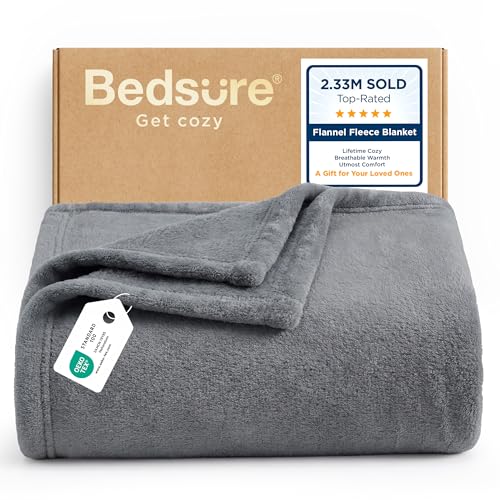


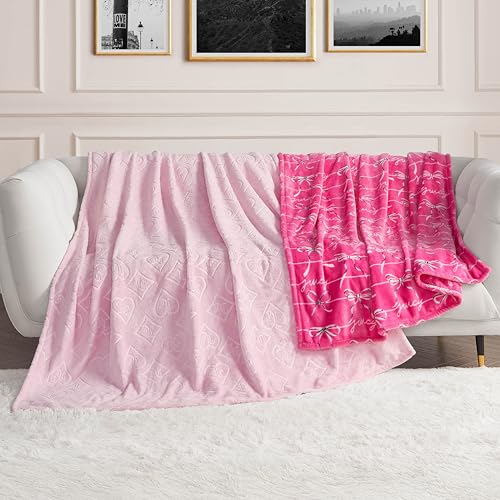
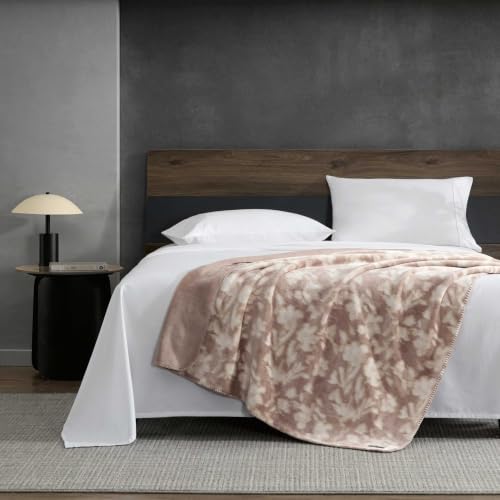


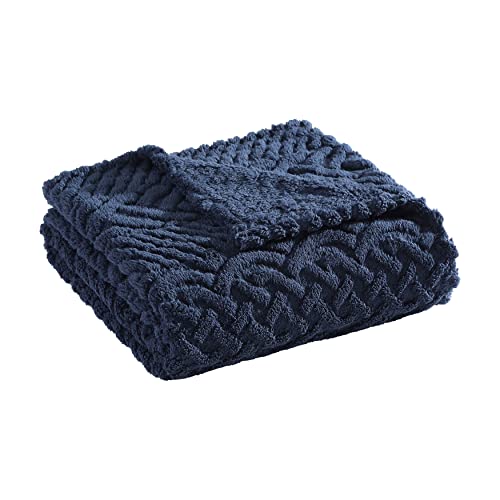


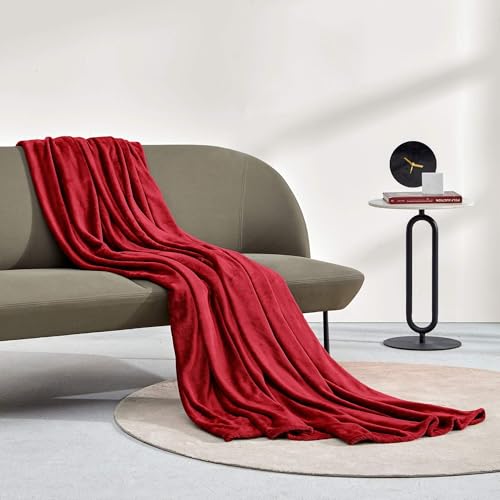


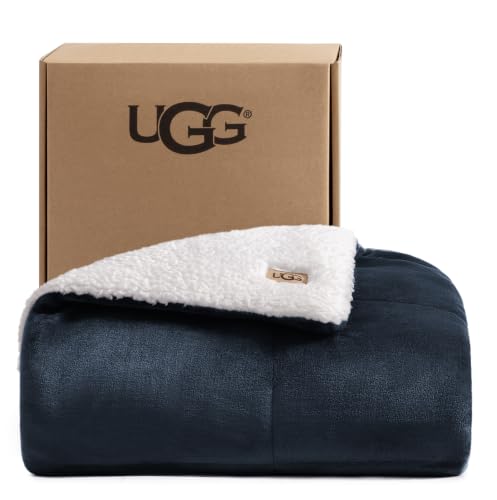


What’s in this listFleece, flannel-fleece and microplush blankets, as the listing names the fabric. “—” means neither the maker nor the Amazon listing states it.
Fleece is a fabric with a brushed surface
A fleece blanket is a throw blanket or bed blanket made from fleece: a knit fabric brushed on the surface until it's soft and fuzzy. Listings call it fleece, polar fleece, microfleece, flannel fleece, microplush or plush. They're all in the same family, and this page covers all of them.
Fleece is the plain, hard-working throw. It's light, so it's easy to carry from the couch to the bed. It washes and dries without much fuss. It's sold in more colors and prints than any other throw fabric I've seen in a store aisle. (At the fabric store on Grand Avenue, the fleece bolts take up an entire wall. Every November, the wall empties.)
Here's the rule I give people: a fleece blanket is the one you won't mind someone spilling on. If that's what you need, this is your fabric.
What to look at in the table
Every row comes from the maker's listing or the maker's own page. This page shows throws and blankets whose stated fabric is fleece, flannel fleece or microplush, including fleece lined with sherpa. A blank cell means the maker doesn't state that detail.
Fabric name: fleece, flannel fleece or microplush
The fabric row shows what the listing calls it. These names describe how the surface feels, not what it's made of:
- Fleece or polar fleece. A brushed knit with a soft, slightly lofty surface.
- Microfleece. A thinner, finer fleece. Lighter and less bulky.
- Flannel fleece. A smooth, low-pile fleece with a flat, velvety feel.
- Microplush or plush. A dense, very short pile. Silky to the touch.
- Sherpa-lined fleece. Fleece on one side, sherpa on the other.
Two blankets with the same fabric name can still feel different. That's what the GSM row is for.
Fiber content: the line that settles it
Fleece is a fabric, so the fiber is a separate fact. Under the Textile Act, blankets and throws must list fibers by generic name and percentage by weight, from most to least. That line tells you whether a "flannel" blanket is cotton flannel or polyester fleece. They're very different to wash and to sleep under. The table copies the fiber line as the maker states it, never rounded.
Sherpa side
The sherpa row shows when one side is sherpa, a nubby fleece that looks like sheep's wool. Sherpa-lined fleece is thicker and heavier than single-layer fleece. If you want the lightest blanket, look for a listing without a sherpa side. Sherpa has its own page: sherpa blankets.
GSM, when stated
GSM means grams per square meter, a fabric weight. A higher GSM fleece is denser than a lower GSM fleece. GSM only compares like with like, so compare one fleece with another fleece, not with faux fur or wool. Few fleece listings state it, and the table leaves it blank when they don't.
Size and dimensions
Size is the maker's size name. Dimensions are the blanket's width and length in inches. US labeling rules require blankets and throws to state their finished length and width on the package, and the mattress size when they're made for a bed. Store fields sometimes list a package size instead, so we check the dimensions against the size name before they go in the table.
Care and OEKO-TEX
The care row shows the maker's care text. Most fleece is easy, but "easy" still has a setting. OEKO-TEX Standard 100 is a label for textiles tested for harmful substances, and each label has a number you can check online. We show it only when the maker states it for that blanket.
Fleece throw blanket or fleece bed blanket?
A fleece throw blanket is couch-sized. A fleece bed blanket is sized to a mattress. The blanket type row tells you which.
- Fleece throw. For the couch, a reading chair or a nap. Labels you'll see include 50 x 60 inches and 50 x 70 inches.
- Oversized fleece throw. Bigger, for two people on a couch or the top of a twin bed. Often around 60 x 72 or 60 x 80 inches.
- Fleece bed blanket. Twin through king, for layering under a comforter.
For a bed, check the finished size against your mattress with the bedding size guide. A fleece bed blanket under a comforter is a common winter layer in this house. (The radiator knocks either way. The fleece doesn't help with that.)
Where a fleece blanket earns its keep
Fleece is the blanket I'd hand someone for almost any room, because it doesn't need babying. A few places it works especially well:
- The couch. It's light enough to pull over your lap and toss aside when you get up.
- The car. A folded fleece throw in the back seat is a Minnesota habit for a reason. Winter doesn't care about your schedule.
- A dorm or first apartment. It washes in a shared machine without drama.
- The cabin. It goes in the wash after a weekend without fuss.
- The guest room closet. One extra layer for the guest who's always cold.
- Movie night. Everybody gets their own, and nobody fights over the big one.
If the blanket will travel or get used by many people, care matters more than softness. Look at the care row first.
Layering fleece on a bed
On a bed, fleece usually works as a middle layer. Here's the order I use when I make a winter bed:
- Fitted sheet and flat sheet. The flat sheet keeps the fleece off your skin, if you prefer that.
- Fleece bed blanket. Sized to the mattress, tucked or loose.
- Comforter or quilt on top. The heavy layer goes last.
Some people like fleece right against them instead. Either way works. A fleece blanket is easy to pull off at 2 a.m. if you get warm, which is more than I can say for a duvet with a stuck corner.
Housekeeping rule for guest beds: fold the fleece at the foot of the bed, not under the comforter. Guests can see it and use it without unmaking the bed. It's the one turn-down detail I kept from the hotel for my own house.
Fleece as a gift
A fleece throw is an easy gift. Pick a color or print the person will like, check that it's machine washable, and check the finished size so a tall person gets a longer one. For other gift ideas, see cozy gifts.
Buying fleece blankets in bulk
Fleece blankets in bulk come up for teams, classrooms, church drives, guest rooms, cabins and holiday gifts. A few things to check when you're buying several at once:
- The pack count. Is it one blanket or a multipack? The listing should say.
- The finished size of each blanket. Multipacks are sometimes smaller throws. Read the dimensions, not the photo.
- The fiber line. The same model in different colors should have the same fiber content. Check it once.
- Care that fits a crowd. For blankets that will be washed often, machine wash and tumble dry low is what you want to see.
- Same model, same feel. Buying several of one model keeps them matched.
The table shows one row per model. Pack sizes are on the listing itself, so read the title before you compare.
Washing fleece without wrecking it
First, read the care tag. The FTC's Care Labeling Rule covers clothing and fabric sold for making clothes. It doesn't list blankets, so the care text on a fleece blanket is the maker's own. Fleece is forgiving, but here's how I'd treat it:
- Follow the stated temperature. Whatever the tag gives, not a guess.
- Use the stated dryer setting. Low or air dry, if that's what it says. Don't pick a hotter setting to finish faster.
- Wash with similar fabrics. Fleece picks up lint from towels and cotton.
- Go easy on the extras. If the tag says no fabric softener or no bleach, it means it.
- Shake it out. A good shake after drying brings the surface back up.
Housekeeping rule: fleece goes in the dryer, not on the radiator. I've told Dev this more than once. The radiator has heard me say it more than once.
My one opinion on this page, with a reason you can check: for a blanket that gets used every day, pick the one whose care row says machine wash and tumble dry. That row is on the listing, and it's the one that decides whether this blanket is easy or a chore.
Pilling and static
Fleece can pill, which means small balls of fiber form on the surface where it rubs. It's more likely on the side that rubs the couch or other fabrics. Washing it with similar fabrics, on the cycle the tag allows, is the usual habit. A fabric shaver takes care of pills later.
Fleece can also build static in dry winter air. In a Minnesota January, so can everything else, including doorknobs, the cat next door and Dev's hair after a hockey helmet. A little static is a fabric thing, not a defect, and it usually fades as the air gets less dry. The care tag will tell you whether dryer sheets or softener are allowed.
Who should skip a fleece blanket
- People who want natural fibers only. Look at cotton blankets or wool blankets.
- Anyone who sleeps hot under synthetic fabrics. A cotton or waffle blanket may suit you better.
- Shoppers wanting a dressy throw for a guest bed. Faux fur throws and knits are more decorative.
- Someone who wants cotton flannel. That's a different fabric. See flannel blankets.
Related pages and brands
The brands in the table link to their own pages, and the brand catalog lists every bedding brand we cover. The table's order follows the data, and every brand is treated the same.
- Throw blankets, the parent page, with every throw fabric
- Best fleece blankets, chosen by stated fabric and specs
- Sherpa blankets, flannel blankets and soft blankets
- Bedding & Throws, the whole section
Brands in this list
Related
Questions people ask
What is a fleece blanket made of?
Fleece is a fabric, not a fiber. The fiber is on the label: US rules require blankets and throws to list fiber content by generic name and percentage by weight. Fleece blankets often list polyester, but read the fiber line for the blanket you're looking at. The table copies it as the maker states it.
Is flannel fleece the same as cotton flannel?
Not necessarily. "Flannel" on a listing can mean brushed cotton flannel or a polyester fleece sold as "flannel fleece". The two feel different and wash differently. The fiber line settles it: cotton flannel lists cotton, and flannel fleece usually lists a synthetic fiber. This page covers the fleece kind; cotton flannel has its own page.
Can you put a fleece blanket in the dryer?
Most fleece blankets can go in the dryer on the setting the care tag gives, often low. The FTC's Care Labeling Rule covers clothing, not blankets, so care instructions are the maker's own. The table shows care only as the maker states it, so read that row before you buy.
Where can I buy fleece blankets in bulk?
Fleece blankets in bulk usually means a multipack or several of the same blanket. Check that each listing states the number of blankets, the finished size of each one and the fiber content. Compare listings blanket by blanket, not pack by pack, so a three-pack of small throws isn't mistaken for three bed blankets.
What's the difference between fleece and sherpa?
Fleece is flat and smooth on the surface, with a short, brushed pile. Sherpa is a fleece with a nubby, curly face that looks like sheep's wool. Many fleece blankets have a sherpa side, sold as sherpa-lined fleece. The table's sherpa row shows when one side is sherpa.
Sources
- Federal Trade Commission — Threading Your Way Through the Labeling Requirements Under the Textile and Wool Acts — accessed 2026-10-27
- Federal Trade Commission — Clothes Captioning: Complying with the Care Labeling Rule — accessed 2026-10-27
- NIST Handbook 130 (2026), Uniform Packaging and Labeling Regulation §10.9.2 Textiles — accessed 2026-10-27
- OEKO-TEX — OEKO-TEX Standard 100 — accessed 2026-10-27