Bedding & Throws · Type
Sherpa Blankets
A sherpa blanket has at least one side of sherpa: a thick, curly polyester pile made to look like sheep's wool. Most pair it with a smooth fleece, flannel or faux fur on the other side. Choose one by size, by which side you want against your skin, and by the care tag. The table shows the fabric, fiber content and weight only where the maker states them. (The sherpa throw is the one Dev borrows from downstairs and forgets to bring back.)
We earn a commission if you buy through our links, at no cost to you. Disclosure


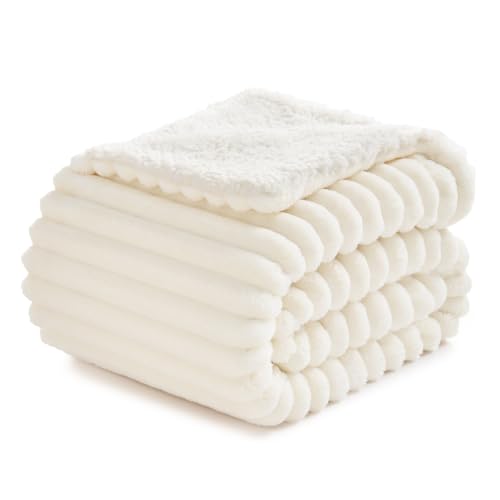


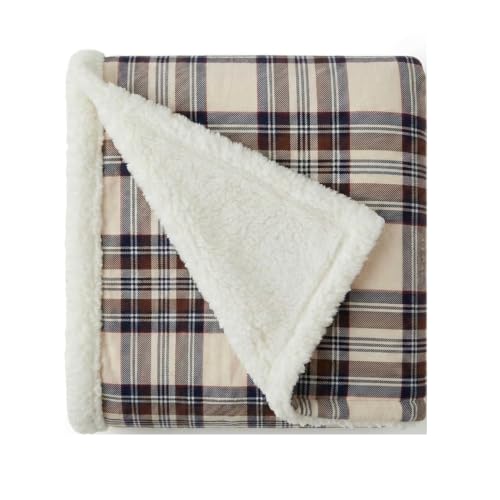


What’s in this listBlankets with a sherpa face or a stated sherpa back. “—” means neither the maker nor the Amazon listing states it.
A sherpa blanket is a thick pile throw
Here's the rule. A sherpa blanket is a blanket or throw with a sherpa side. Sherpa is a pile fabric, short curly fibers standing up from a backing, made to look like the fleece of a sheep. It's almost always polyester. The name describes how it looks, not what it's made of.
Most sherpa blankets are two-sided:
- Sherpa on one side, smooth fleece or flannel on the other. The most common build. You pick which side faces you.
- Faux fur on one side, sherpa on the other. A heavier, plusher pairing. See faux fur throws.
- Sherpa on both sides. Less common. Thick and warm.
- Sherpa-lined. Sherpa on the inside of something else, like a wearable blanket or a hoodie blanket.
A sherpa blanket is a kind of throw blanket, and the parent page explains throws in general. This page is about the sherpa part.
What to read in the sherpa blanket table
A value shows only when the maker states it. A blank means the maker didn't say, not "no".
Sherpa side: which face is sherpa
The sherpa column shows whether the maker says one side is sherpa or has a sherpa back. That's how a blanket gets onto this page. I check it because "sherpa" sometimes shows up in a listing's long description for a blanket that's fleece on both sides. We go by the maker's stated build, not a stray word.
Fabric and fiber content
The fabric column names the main face: fleece, flannel, microplush, faux fur and so on. The fiber content column is the label line, word for word.
Under the federal Textile Act, bedding labels must list each fiber by its generic name with its percentage by weight. Pile fabrics have their own rule: the maker can state the fiber content for the whole blanket, or for the pile and the backing separately, with the ratio between them. So you may see "100% polyester", or a split between face and back. Both are honest. "Sherpa" alone is not a fiber.
Fabric weight in GSM
GSM means grams per square meter: how much a square meter of the fabric weighs. Some makers state it for sherpa and fleece. A higher GSM on the same kind of fabric usually means a denser, heavier throw.
Two cautions. GSM only compares like with like: a sherpa's GSM and a cotton throw's GSM don't line up. And we never work GSM out from the blanket's total weight. If the maker doesn't state it, the column is blank.
Blanket weight, as stated
Some listings give the blanket's total weight in pounds or ounces. Listing weights can mix up the blanket with its shipping box, so the table shows a weight only when it comes from the maker. A sherpa throw isn't a weighted blanket. If you're after deep pressure, that's a different product with its own rules: see weighted blankets.
Cooling and OEKO-TEX
A sherpa blanket with a stated cooling feature is rare. Sherpa is a warm fabric. The cooling column fills only when the maker says how, like a cooling yarn on one side. Hot sleepers will do better on cooling blankets.
OEKO-TEX STANDARD 100 is a label for textiles tested for harmful substances. OEKO-TEX says every component of a labeled item is tested, and you can check a label by scanning its QR code or entering the certificate number in its Label Check. The table shows it only where the maker states it.
Sherpa throw blanket and bed blanket sizes
Sherpa comes in throw sizes and bed sizes, and the blanket type column tells you which.
Throws have no standard size. Many are listed around 50 x 60 inches. Oversized throws run bigger, around 60 x 70 or 60 x 80 inches, but each maker sets its own. Pick by what you'll cover:
- Your lap on the couch. A standard throw is usually plenty.
- All of you, shoulders to toes. An oversized throw, or measure your height and compare.
- The foot of a bed. Match the throw's width to the bed's width.
Bed blankets follow the mattress. The Better Sleep Council's standard mattress sizes are twin 38 x 75 inches, full 53 x 75, queen 60 x 80 and king 76 x 80. A sherpa bed blanket should be wider than the mattress if you want it to hang over the sides. The bedding size guide checks any label against your bed.
One more trap. A listing's "dimensions" can be the size of the folded package. A throw is not a shoebox. We show finished sizes only.
Which side faces you
On a two-sided sherpa blanket, the sides do different jobs. The sherpa side is the thick, lofty one. The smooth side, fleece or flannel, is flatter and slides more easily.
How people usually use them:
- Sherpa side down, against you. The plushest feel and the most warmth on your skin. Good on a cold couch.
- Smooth side down. Easier to pull up and turn under. On a bed, a smooth side slides against a comforter instead of gripping it.
- Sherpa side up on a bed. For the look. It shows the texture and keeps the smooth side touching the sheets.
There's no wrong answer. It's a throw, not a contract. If you know you like one feel against your skin, check the listing photos for both sides before you order, since the table shows the fabric of each side only as the maker names it.
Match the sherpa blanket to how you'll use it
- Couch and reading chair. A standard throw, sherpa on one side. This is what sherpa does best.
- An extra layer on the bed. A bed-size sherpa blanket over your sheets and under a comforter, or across the foot of the bed for cold feet. Check the bed size against your mattress.
- A cold home office. A throw over your knees beats turning the heat up for one room. For something you can wear while typing, see wearable blankets.
- A guest room. One folded throw at the foot of the bed. Guests who run cold will find it. Guests who run warm will ignore it.
- A dorm or first apartment. A throw that doubles as a bed layer. Machine-washable matters most here.
What a listing can't tell you
A table can show fabric, fiber, size, weight and care. It can't show how a pile will look after a winter on your couch. That depends on use and washing as much as on the blanket. Two things are in your control: wash it by the tag, and keep it away from rough fabrics in the wash. If the maker states GSM, that's the closest thing to a density number you'll get. If the maker states nothing about care at all, the care column says so, and I'd treat that as a reason to look at the next row.
Sherpa or one of its neighbors
Sherpa sits in a family of soft, warm throws. Here's how I'd choose between them:
- Fleece blankets. Lighter, thinner, smooth on both sides. Easy to wash and dry. For people who find sherpa too heavy.
- Flannel blankets. Brushed and soft, flatter than sherpa. Often the smooth side of a sherpa blanket.
- Faux fur throws. Longer, silkier pile. Often backed with sherpa.
- Minky blankets. A short, velvety plush.
- Heated throws. Some come with a sherpa side. Those are electrical products with their own page, where auto shut-off and safety listings are required columns.
If you just want the warmest-looking throw on the chair, sherpa. If you want something to wash every week, fleece is less fuss.
Storing a sherpa throw in the archive
Sherpa is the bulkiest thing on my throw shelf. A fleece throw folds into a neat square. A sherpa throw folds into a small hill. So I roll them instead: fold in half lengthwise, smooth side out, and roll from one end like a sleeping bag. The roll stands on the shelf without leaning on its neighbors.
Two more storage notes:
- Wash it before you put it away for summer. Store it clean and fully dry.
- Use a breathable bag. A cotton bag or an old pillowcase, not sealed plastic.
Every roll gets a label, of course. Dev's borrowed one comes back with a sticky note that says "returned". Sometimes in March.
Who should skip a sherpa blanket
- You sleep hot or live somewhere warm. Sherpa is a warm, heavy pile. A cotton blanket or a waffle blanket breathes more.
- You want a light throw to toss over a shoulder. Sherpa is bulky. Fleece folds smaller.
- You need a natural fiber. Sherpa is almost always polyester. Look at wool blankets or cotton instead.
- You want something that dries fast. A thick pile takes longer to dry than a thin fleece.
How to care for a sherpa blanket
Housekeeping rule: read the care tag before the price tag. Most sherpa blankets are labeled for the home washer, usually cold and gentle, but tags differ. Some say tumble dry low. Some say air dry. Your blanket's tag is the one that counts.
What I'd add:
- Wash it alone or with other soft things. Zippers and towels leave lint and snags in a pile.
- Shake it out before drying. The curls dry better loose.
- Take it out when it's dry. Don't leave it baking in the drum.
- Skip fabric softener if the tag says to. Some do.
A sherpa throw that's washed by the tag stays a throw. One that isn't becomes a dog bed. (We don't have a dog. Rosa's beagle, Biscuit, has opinions about that.)
More throw pages
Parent page: throw blankets. Related: soft blankets, oversized blankets, fleece blankets, faux fur throws. For a short list of throws, see best throw blankets and best fleece blankets.
Tuck it in.
Related
Questions people ask
What is a sherpa blanket made of?
Usually polyester. Sherpa is a pile fabric with a thick, curly surface made to look like sheep's fleece; the name describes the look, not a fiber. US labels have to list the fiber content by generic name and percentage, and for pile fabrics a maker may list the pile and the backing separately. The fiber content column shows what the maker states.
What's the difference between a sherpa fleece blanket and a fleece blanket?
A fleece blanket is usually smooth, brushed polyester on both sides. A sherpa fleece blanket has a sherpa side, the thicker curly pile, often backed with a smooth fleece or flannel. Sherpa tends to be heavier and loftier. If you want a lighter throw, look at fleece; if you want a thick one, sherpa.
What size is a sherpa throw blanket?
There's no single standard. Many throws are listed around 50 x 60 inches and oversized throws around 60 x 70 or 60 x 80 inches, but each maker sets its own. Read the finished size on the listing and compare it with what you want to cover: your lap, a couch seat or the foot of a bed.
Can you put a sherpa blanket in the dryer?
Follow the care tag. Many sherpa blankets are labeled machine wash cold and tumble dry low, and some say air dry. The tag is the instruction that counts for your blanket. Shake it out before it goes in, and take it out as soon as it's dry.
Is a sherpa blanket warm?
Sherpa is a thick pile, and a raised fiber surface adds insulation, so sherpa blankets are usually on the warm side of throws. How warm one feels depends on its weight, its other side and your room. The table shows the fabric weight in GSM only where the maker states it.
What is the best sherpa blanket?
The one that fits how you'll use it. Pick the size first: a throw for the couch, a bed size for the bed. Then pick the other side, fleece, flannel or faux fur, by the feel you like. Last, read the care tag; a sherpa you can wash at home gets used. The table shows each of those only as the maker states it.
Sources
- FTC — Threading Your Way Through the Labeling Requirements Under the Textile and Wool Acts — accessed 2026-10-27
- Encyclopedia.com — Flannel (Encyclopedia of Clothing and Fashion, Gale) — accessed 2026-10-27
- Better Sleep Council — Mattress Sizes — accessed 2026-10-27
- OEKO-TEX — STANDARD 100 by OEKO-TEX — accessed 2026-10-27