How we picked the best throw blanket list
Every pick is a throw or an oversized throw whose listing states its fabric. We kept at most a couple per fabric and only one per brand, so the list covers the main fabric families instead of twelve versions of the same grey fleece. The table under this text shows each pick's throw type and fabric as the maker states them.
That's a different job from a ranking. This page doesn't say one throw is better than another. It lines up the fabrics side by side so you can choose the one that suits your couch, your room and your washing machine, then pick a throw within it.
A throw blanket is a small, loose blanket for the couch, a chair or the foot of the bed. It's sized for a person, not a mattress, and it moves around the house. (In this duplex, throws move mostly upstairs. They rarely come back down on their own.)
Choose the fabric first
Here's the rule. Fabric first, size second, pattern last. Fabric decides how warm the throw is, how it feels, how it washes and how long it looks good. Pattern decides nothing except whether you like it.
My one opinion on this page, with a reason you can check: trust the fabric line over the product title. Titles on throw listings tend to stack every soft-sounding word at once. The fabric line is the one place the listing commits to a single answer, and US labeling rules back that up: household textiles like throws must list fiber content by generic fiber name and percent by weight. When the title and the fiber tag disagree, the tag wins.
Here's how the fabrics on this list break down.
Fleece, flannel and microplush
Two picks are listed as fleece / flannel / microplush in polyester: the Andency throw and the BEAUTEX throw. These are brushed polyester fabrics with a short, soft nap. They're the everyday couch blanket: light enough to grab, warm enough for an evening, and usually easy to wash. If you're buying one throw for a family room, this is the safe fabric.
Who should skip it: anyone who wants natural fibers next to their skin, and anyone who runs warm and finds polyester holds heat.
Sherpa, with a sherpa back
Three picks are listed with a sherpa back: the BEDELITE throw and the Bedsure GentleSoft throw (both sherpa-lined flannel / fleece) and the Berkshire Blanket throw (sherpa / fleece). Sherpa is a fleece made to look like sheep's wool, with a thick, curly surface. A sherpa back means one side is sherpa and the other is a smoother flannel or fleece.
That two-layer build makes these the thicker choice among the polyester throws. They suit a cold room, a drafty chair by the window or anyone who's always the coldest person on the couch.
Who should skip it: people who run warm, and anyone shopping for a summer layer.
Faux fur
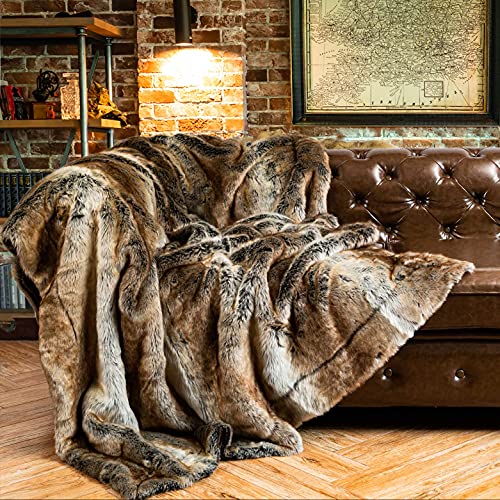
Two picks are listed as faux fur: the Bare Home throw and the Battilo throw. Faux fur is a long-pile fabric made to look like fur. It's the most decorative fabric on the list, and the one most often folded over the arm of a sofa for looks.
Long pile catches things: crumbs, pet hair, the occasional earring. Faux fur also tends to want gentler washing than fleece. Read the care tag before you choose it for a couch that sees snacks.
Who should skip it: homes with a shedding dog, and anyone who wants to wash a throw with the towels.
Knit and chunky knit
Two picks are knit: the BOLL & BRANCH throw (knit) and the Amélie Home throw (chunky / chenille knit). Knit throws are made by looping yarn rather than weaving it, so they stretch and drape. Chunky knits use thick yarn and have big, open stitches; chenille is a yarn with a soft, fuzzy pile.
Knit throws look good on the back of a chair and suit a guest room or a reading corner. Open stitches can catch on rings, buttons and cat claws. (Mine lives on the back of the reading chair, well away from Dev's watch strap. We've had one incident.)
Who should skip it: anyone who wants a throw that can take rough daily use, or who won't follow a gentler care line.
Woven cotton and waffle cotton
Three picks are cotton: the Americanflat throw and the Barefoot Dreams throw (both listed as woven cotton) and the Brooklinen throw (waffle cotton, a cotton woven in a grid of small square pockets). Cotton is a plant fiber, and woven cotton throws are usually lighter than fleece or sherpa.
They're the throws you can leave out all year: on the bed in summer, over a comforter in winter. A waffle weave adds texture and a little loft without much weight.
Who should skip it: anyone who wants the warmest throw on the list for a cold night. Cotton is the layer, not the parka.
Where the throw lives decides the fabric
The same throw does a different job in every room. Before you choose, picture where it will spend most of its life.
- Family room couch. Daily use, snacks, maybe a dog. Fleece or sherpa, because they're the easiest to wash often.
- Reading chair by a window. Drafts and long evenings. Sherpa for warmth, or a knit if the chair is mostly for show.
- Foot of the bed. Folded most of the time, pulled up for naps. Cotton or waffle cotton for all year; faux fur if it's mainly there to look nice.
- Guest room. Used a few nights a year. Any fabric, as long as you can wash it before and after a guest. (Housekeeping rule: a guest room throw gets washed after every guest, whether it looks used or not.)
- Car or porch. A fleece or a woven cotton you won't mind getting dusty.
One throw rarely covers every room well. That's why most homes in Minnesota end up with several, and why the list spreads across fabrics instead of stacking one.
At the fabric store on Grand Avenue, the question I hear most in November isn't about color. It's "What is this made of?" The answer is printed on the end of the bolt, the same way it's printed on a throw's fiber tag. Nobody reads it until I point at it. Then everybody reads it, and half of them pick a different bolt.
Size: check the label, not the photo
The specs we have for these picks state the fabric and the throw type, not the size, so the table doesn't show a size column for them. Some product names include a size, and the finished size on the label is the number to trust.
Throws don't follow one standard size. Labels you'll see often run around 50 x 60 inches for a standard throw and larger for oversized throws. Measure what you want to cover before you buy:
- Couch use. Sit on the couch and measure from your shoulders to your feet. That's the length you need.
- Two people sharing. An oversized throw, or two throws. (Two throws end more arguments.)
- Foot of the bed. Measure the width of the mattress. A throw folded at the foot should sit inside it, not hang off one side.
If you want to see how a finished size compares with a mattress, the bedding size guide has a label check.
Care: read the tag before the price tag
Read the care tag before the price tag. A throw that can't go in your home washer is a throw you'll stop using, or a throw that becomes a decoration.
Here's a detail most people don't know. The FTC's Care Labeling Rule requires care instructions on clothing and some piece goods. Blankets and throws aren't named, so the care line on a throw is up to the maker. The specs we have for these picks don't include a care line, which means you'll read the tag when it arrives. Do it before the first wash, not after.
General habits by fabric, always behind the care tag:
- Fleece and sherpa. Often machine washable; check the dryer heat the tag allows.
- Faux fur. Wash it alone if the tag allows, never with towels.
- Knit. Follow the tag closely; some knits ask for hand washing or laying flat to dry.
- Cotton and waffle cotton. Often the simplest to wash; the tag says how warm.
In my hotel years, a throw blanket was the item most likely to come back from the laundry looking like a different throw. That's not a reason to avoid them. It's a reason to read the tag.
How to choose within the list
- Pick your fabric family. Fleece for everyday, sherpa for cold rooms, faux fur for looks, knit for a chair, cotton for all year.
- Check the size on the label. Measure your couch or the person first.
- Read the care tag. Make sure your washer can handle it.
- Then pick the color and pattern. Last, and the most fun.
If two picks share a fabric, they're on the list as two takes on the same idea. Choose between them by size, color and the care tag once it's in your hands.
Who should skip this list
- Someone shopping for a bed blanket. A throw won't cover a mattress. Look at comforters or the bedding section.
- Anyone who wants warmth with a plug. That's a different product with its own safety rules. See best heated blankets.
- Someone who wants a weighted throw. Weight is chosen by the maker's chart. See best weighted blankets.
- A household that already owns six throws. You don't need a seventh. You need to find the six. (Check upstairs.)
For a throw as a present, the cozy gifts page picks throws alongside wearable blankets and heated throws.
How the list is kept
The list is rebuilt from current Amazon US listings and the specs makers state. A throw drops off if its listing stops stating a fabric or stops being available. The fabric is copied as the listing states it; we don't guess a fabric from a photo, and we don't rename one. The order follows the data, never a brand.
Nobody here has slept under, washed or folded these particular throws. The list tells you what each maker states, so you can choose the fabric you want and skip the ones you don't.
Fabric first. Then the fun part.