Guide
Walking Pad Workouts: Simple Routines That Add Up
A good walking pad workout is steady walking at a pace where you can talk but not sing, in pieces that fit your day. The CDC's guideline for adults is 150 minutes a week of moderate activity, such as brisk walking, and you can split it into shorter walks. So the routines below are about minutes and effort, not speed records. I'm Dev. My walking pad lives under my desk, and my best workouts happen during meetings I don't need to talk in.

How to use a walking pad before you plan a workout
Get the basics right first, because a routine only works if the setup does.
- Level floor, with a dense mat under the pad if you have one
- Clear floor behind the belt: no chair, no basket, no dog bed
- Safety key or clip attached, if the pad has one
- Shoes you'd walk outside in
- Start and stop the way the manual says, at the lowest speed
- Eyes forward, not on your feet
Speed up only after you're walking steadily. Slow down before you stop. And stop the belt before you step off, even for a second to grab the door. (The doorbell is undefeated. It always rings at minute three.)
If the pad is new to you, spend the first few walks at an easy speed while you learn where the edges of the belt are. A walking pad is narrower than a sidewalk and doesn't forgive a drift to one side.
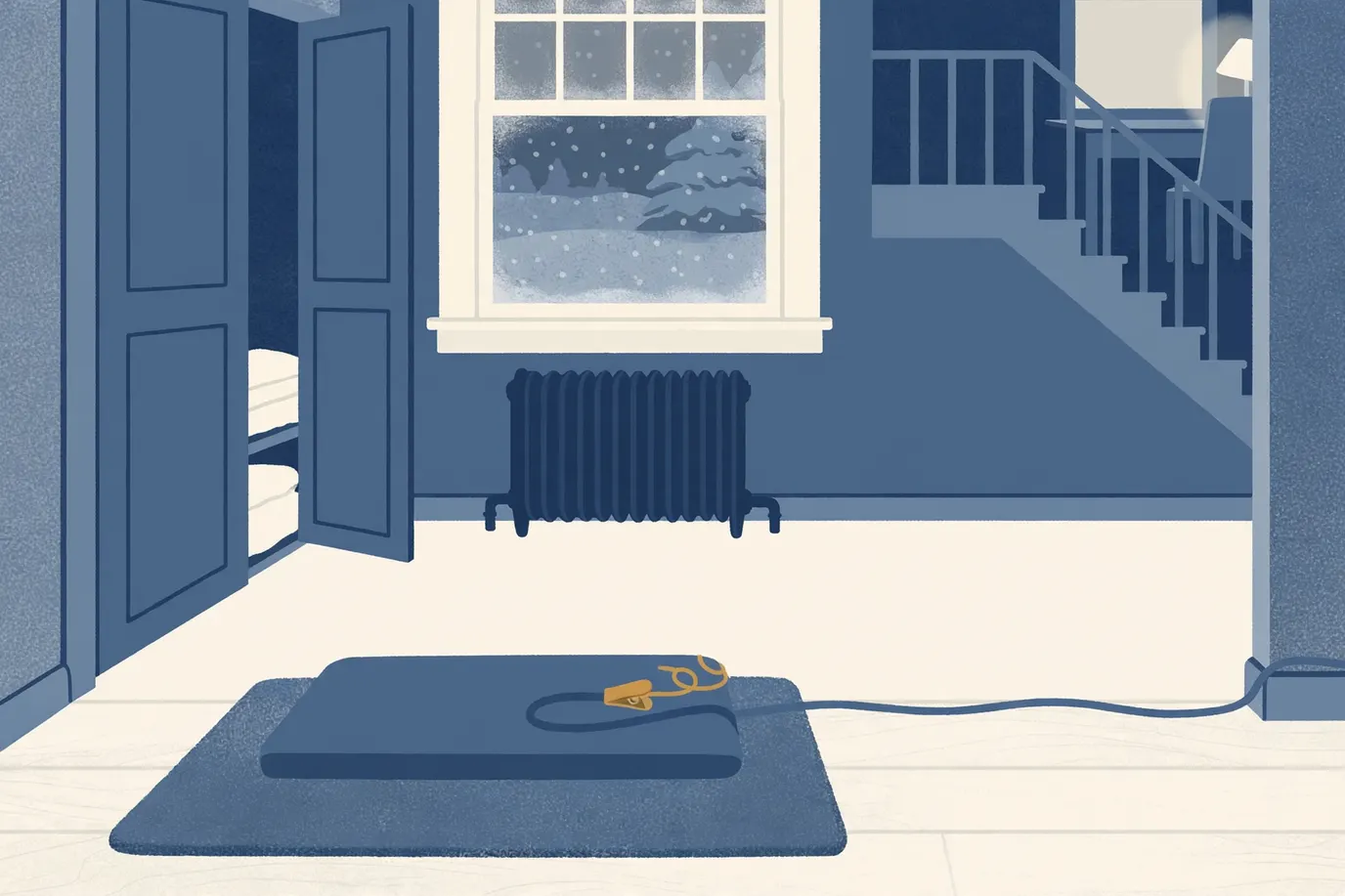
The walking pad workout target: 150 minutes a week
The number to plan around comes from the CDC. Its guideline for adults is 150 minutes a week of moderate-intensity activity, such as brisk walking. It also calls for muscle-strengthening activity on at least 2 days a week, which is a job for something other than a walking pad.
The useful part for a desk walker: the 150 minutes can be broken up. The CDC's own example is 30 minutes a day, 5 days a week. The second edition of the federal Physical Activity Guidelines dropped the old rule that activity had to come in bouts of at least 10 minutes. It says adults who sit less and do any amount of moderate-to-vigorous activity gain some health benefits.
The same guidelines open the adult section with "move more and sit less throughout the day." A slow walk between emails is moving more, even before it counts as moderate.
If you're starting from very little, don't start at 150. The guidelines have a short rule for inactive people: "start low and go slow." Begin with easier walks and add to how often and how long over time. They also say people with chronic conditions or symptoms should be under a health care provider's care and can ask about the types and amounts of activity right for them.
Moderate intensity: the talk test beats the display
Moderate is an effort level, not a speed. The CDC gives two easy checks:
- Talk test. At moderate effort you can talk, but not sing. At vigorous effort you can't say more than a few words without pausing for a breath.
- 0 to 10 scale. Sitting is 0, your hardest effort is 10. Moderate is a 5 or 6.
The CDC lists walking briskly, at 2.5 mph or faster, as an example of moderate intensity. Treat that as an example, not a target. Your fitness changes what moderate feels like, so a speed that's moderate for me can be easy for you, or the other way around.
Check your pad's top speed in the manual or on the listing, too. A walking-only pad may top out lower than you'd walk outside. That's fine. The talk test still works at the speeds you have.
Five walking pad routines that fit a normal day
These are example plans, not prescriptions. Pick one, try it for a week, adjust. The speeds you use are yours; the treadmill speed chart turns the mph on your display into minutes per mile if pace is easier to think in.
The between-calls walk
Three 10-minute walks a day, one after each long meeting or block of work. Easy speed for the first couple of minutes, then up to talk-test effort, then easy again for the last minute. Five days of this is the same 150 minutes as five 30-minute walks.
Step count: this is the routine I use most. My calendar decides when, not my motivation.
The steady 30
One 30-minute walk, 5 days a week. Warm up at an easy speed for a few minutes, hold talk-test effort for most of the walk, slow down for the last few. Good for a lunch break or the end of the workday.
The talk-test ladder
Start easy. Every few minutes, raise the speed by one small step until you reach can-talk-can't-sing. Hold there. Then come back down the same steps. It's a way to find your moderate speed without guessing, and you'll want to write it down. (I wrote mine in a spreadsheet. Nobody was surprised.)
The desk walk
A slow, easy walk while you type, read or listen in on a call. This is the move-more-sit-less part. It may not reach moderate effort, and that's fine. Count it as moderate only when the talk test says so.
On calls, I keep the speed low and stay on mute. Margo says the floorboards know anyway.
The weekend TV walk
One longer walk during a show or a game on a weekend day, at whatever effort feels right. A hockey game has three periods, which makes a handy timer. (My rec-league games have three periods too. They feel longer.)
What a sample week looks like
| Day | Routine | Minutes |
|---|---|---|
| Monday | Between-calls walk, 3 × 10 | 30 |
| Tuesday | Steady 30 | 30 |
| Wednesday | Between-calls walk, 3 × 10 | 30 |
| Thursday | Talk-test ladder | 30 |
| Friday | Steady 30 | 30 |
| Weekend | Desk walks or a TV walk, easy | as you like |
That's 150 minutes at moderate effort on weekdays, which matches the CDC's 30-minutes-on-5-days example. Your week doesn't have to look like this. It just has to add up to something you'll keep doing.

Track minutes first, then use the tools
Minutes are the number the CDC guideline uses, so log those first. If you like more numbers, our tools show their math:
- How many steps in a mile: steps to miles at a few measured walking speeds
- Walking calorie calculator: an estimate from a published formula, with incline for treadmills and pads
- Treadmill speed chart: mph to pace and km/h
Your pad's display, your watch and our calculator will all show different calorie numbers. They use different formulas, and all of them are estimates. I don't put calorie or weight-loss goals on any routine here, and a walking pad isn't a promise of either.
Safety comes before the routine
The safety line on this page asks you to stay within the maker's weight limit, use the safety key and keep kids and pets away from moving parts. Here's what that means in practice:
- Weight limit. Check the maker's max user weight before your first walk.
- Safety key. Clip it on every time, if your pad has one.
- Kids and pets. Keep them out of the room or well away from the belt while it runs.
- After the walk. In a 2021 warning about one treadmill model, CPSC told owners to unplug it when not in use and keep the safety key away from the machine and out of reach of children. It's a sound habit for any belt machine.
If you've been inactive and plan to push into vigorous effort, the CDC suggests talking to your doctor first. Stop if something feels wrong, and get it checked.
Keep the belt in good shape, too. Our guide on how to lubricate a walking pad covers the general steps and points you back to the maker's manual.
Gear for this
If you don't have a pad yet, start with the specs that decide fit: max user weight, top speed and deck height.
- Walking pads: how to read every column in the table
- Under-desk treadmills: flat pads sold for standing desks
- Walking pads with incline: only pads with a stated incline figure
- Walking pads with handles: for walking faster away from the desk
Then pick a routine and give it a week. At Wednesday trivia, "how many minutes a week" would be an easy question. Getting them is the harder one.
Questions people ask
How long should I walk on a walking pad?
The CDC's guideline for adults is 150 minutes a week of moderate activity, such as brisk walking. One way to get there is 30 minutes a day on 5 days, and you can split those minutes into shorter walks. If you're starting from little or no activity, begin shorter. The CDC says some physical activity is better than none.
What speed should I walk on a walking pad?
A speed you can hold safely at the effort you want. The CDC lists walking briskly, at 2.5 mph or faster, as an example of moderate intensity, and it also gives the talk test: you can talk, but not sing. Your own talk test decides, not a number. The treadmill speed chart converts the mph on your display into pace.
Can I walk on a walking pad while I work?
Yes, that's what many people buy one for. Typing and calls usually go best at a slow, easy speed, and slow desk walking still means moving more and sitting less, which federal guidelines for adults put first. Use the safety key or clip if the pad has one, and stop the belt before you step off.
Is walking on a walking pad as good as walking outside?
The minutes count the same toward the CDC's weekly guideline. The effort isn't always identical, because the belt moves under you and there are no hills or curbs. The talk test works in both places, so use it to keep the effort moderate. Walk wherever you will actually walk.
Will a walking pad help me lose weight?
We don't make weight-loss or calorie promises for any machine. A walking pad is a way to walk indoors. If you have a weight goal, talk with your doctor about what's right for you. Our walking calorie calculator gives an estimate from a published formula, and it's only an estimate.
Save this guide for later
Sources
- Adult Activity: An Overview — Centers for Disease Control and Prevention — accessed 2026-10-27
- Measuring Physical Activity Intensity — Centers for Disease Control and Prevention — accessed 2026-10-27
- Adding Physical Activity as an Adult — Centers for Disease Control and Prevention — accessed 2026-10-27
- Physical Activity Guidelines for Americans, 2nd edition — Executive Summary (U.S. Department of Health and Human Services) — accessed 2026-10-27
- U.S. Consumer Product Safety Commission — treadmill recall notice (2021): unplug when not in use, store the safety key away from the machine — accessed 2026-10-27